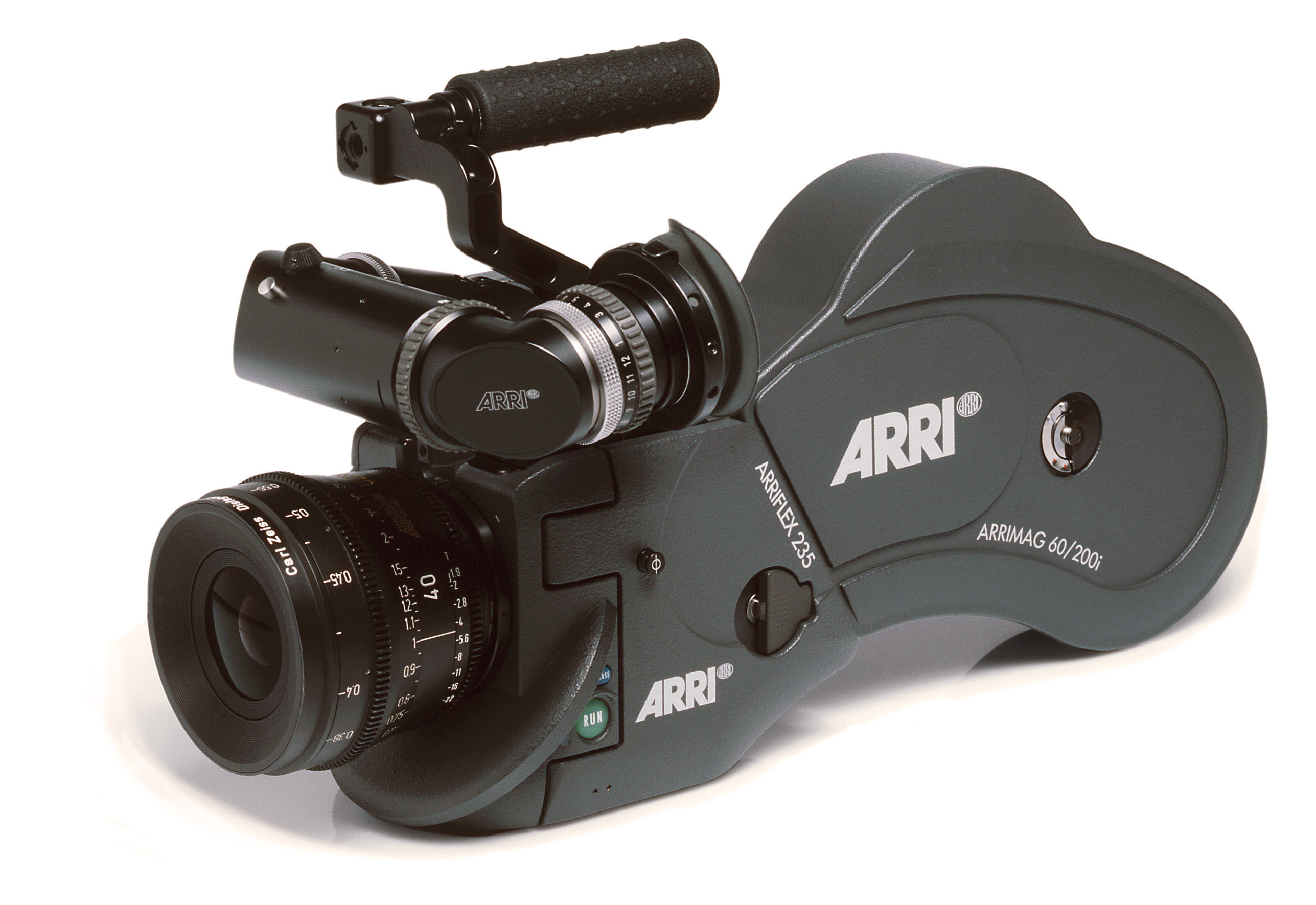
The ARRICAM cameras came with another new capability: LDS—a Lens Data System that displayed focus, iris, zoom and other information about the ARRI/ZEISS lens that was working in its mount. So, in the same year that the ARRICAMs were unveiled, ARRI and ZEISS began to supply Ultra Prime lenses fitted with LDS.
What was about to come came quickly. The combined influences of art, technique, technology, Moore’s Law, manufacturing and marketing resulted in an acceleration of product introductions that would completely change the way movies were made.
April 2001, ARRI Managing Director Franz Kraus raced into the central hall of the NAB exhibition in Las Vegas waving a brand-new Canon EOS D30 digital SLR with the first CMOS image sensor, which he had just purchased at a nearby big-box store. “This is the future of our industry,” he proclaimed. People looked at him with the kind of disbelief with which one might greet a prediction of the end of the world. Someone asked, “How long?” He answered, “2010.” Of course, he was right. Working models of the ARRI ALEXA were introduced in 2010. But we’re getting ahead of the story. Franz Kraus was the visionary technologist at ARRI, with an infectious enthusiasm for image science and the way pictures looked—and a stubborn streak of perfectionism that brooked no shortcuts.