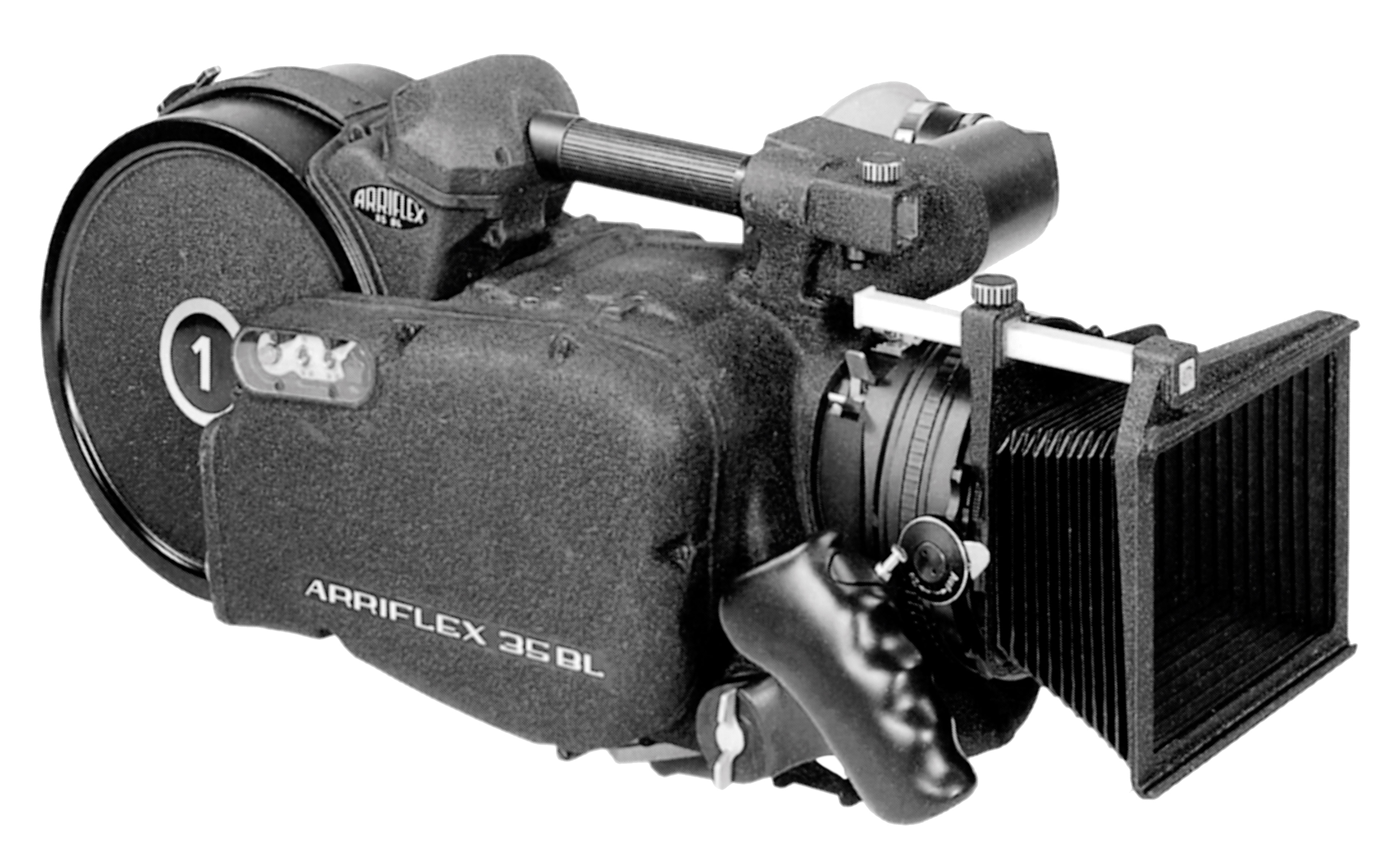
Television news and documentaries were increasingly shot in 16 mm. The ARRIFLEX 16ST was introduced in 1950, based on the same spinning mirror shutter concept as the 35 II. It took 100' spools that could be loaded in daylight, much like the Bell & Howell Filmo, and also accepted 400' magazines. The 16ST was followed by the 16M (magazine only, no daylight spools); then the 16BL arrived in 1965 for 16 mm sync sound documentary and industrial film production. It was ARRI’s first silent camera.
By this time, more than 1,300 employees worked at ARRI around Munich—running the film labs and building camera, lighting, processing and printing equipment. The workforce was well educated and skilled. Munich was, and still is, an epicenter of fine mechanics and precision engineering—partly due to a rigorous apprenticeship program.
1968 – 1983: ARRI Exports to Hollywood and Expands
It took almost a decade to drag Hollywood out of their studios and onto location. In 1968, William A. Fraker ASC shot "Bullitt," directed by Peter Yates and starring Steve McQueen. “We used ARRIFLEXes all the way through, and we destroyed some, but they held up absolutely beautifully for the most part,” Fraker said a few years before he passed away. “I was also one of the first people [in Hollywood] to use a blimped ARRIFLEX. We had to import it from New York, because Hollywood didn’t have any. It was a smaller piece of equipment and we shot on actual locations in San Francisco, like seedy hotels on the waterfront—we just didn’t have the room to put big equipment in.”
Next came "Easy Rider" (1969), shot by László Kovács ASC with Vilmos Zsigmond’s personal ARRIFLEX 35 IIC. The film’s exuberant, documentary, handheld, flared-lens, new-wave style triggered the New Hollywood era of filmmaking in the early 1970s. This American New Wave was enabled by the technology of the cameras that created the spontaneous style—but economics decided where the industry was heading next. Easy Rider was the third highest grossing film of 1969. With a low budget around $360,000, it made $60 million worldwide. If you were a Hollywood mogul, you saw dollar signs in the future of low-budget, independent productions. If you were a camera manufacturer, you would be scrambling to outfit cinematographers with the tools to shoot those new movies.