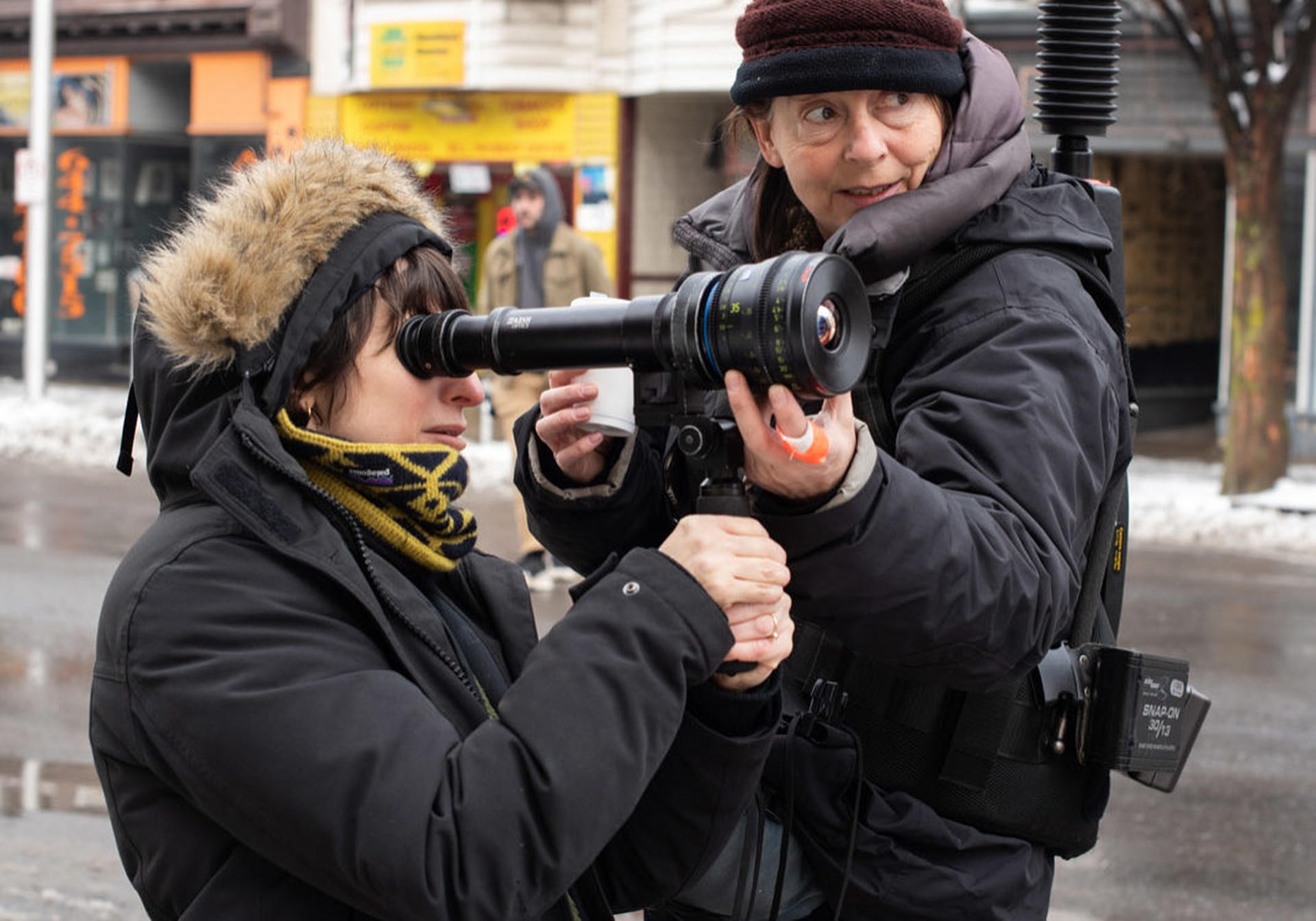
What were your camera equipment choices on this project?
I shot the film entirely in Super 16 with an ARRIFLEX 416 and Ultra Prime lenses. I always use the 416 when shooting in 16 mm. It is the only camera that has a sufficiently bright viewfinder and decent monitor feed for the director. There is also a practical aspect, as I work a lot abroad, and the ARRIFLEX 416 is available almost everywhere in the world. Regarding the Ultra Primes, I find them to be ideal for Super 16 because they have the focus qualities I need when shooting, and their sharpness is just right for 16 mm – neither too much nor too little – while in digital I find them too harsh. They are also lightweight and perform very well, so they make a good combination with the 416.
How did you manage to get so little grain in the image?
I shot with Kodak 7219 500 ASA film, which I had developed in fine grain whenever I could. In postproduction we also reduced the grain a bit when needed, particularly scenes that take place in clinics. The grain should not interfere with the light, and in these scenes it would have blurred the perception of the character. In “Never Rarely Sometimes Always” the Super 16 brings a poetic touch to the image. We didn't want the result to be too documentary; it is a fiction film and Super 16 provides that cinematic aspect. It allowed us to find moments of happiness and magic in this somewhat harsh story: when they sing; when they travel on the bus; or in the bowling scene with its unrealistic blue light. The Super 16 helped the story to be less realistic.