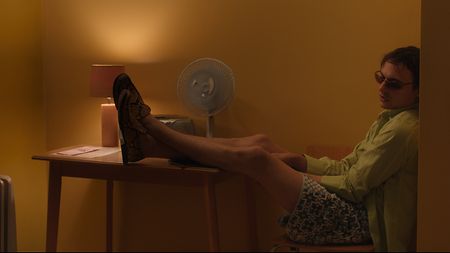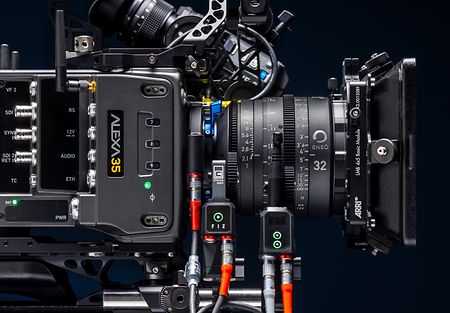
Presented in the Un Certain Regard section of the 2025 Cannes Film Festival, “Urchin” is British actor Harris Dickinson’s first feature film as director, shot in London by cinematographer Josée Deshaies AFC. Winning universal critical acclaim, the film stars Frank Dillane as a troubled young man trying to rebuild his life after serving time in prison for a violent assault committed while living rough on the streets. Deshaies worked with ALEXA 35 cameras and ARRI/Zeiss Master Prime lenses, moving fast between locations and finding solutions to enrich the cloud-diffused English light.
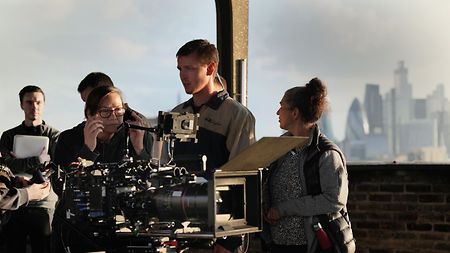
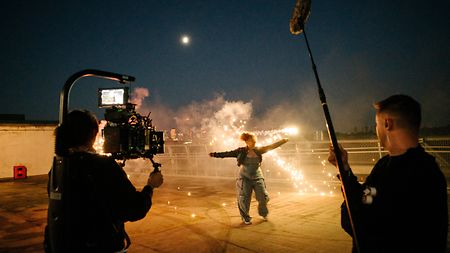
DP Josée Deshaies AFC (left, in glasses) and director Harris Dickinson (center) on set with the ALEXA 35
How did you come to be involved in this project?
It happened very organically; the producer emailed me to suggest that I read the script, then one day Harris called me. He had seen several films I had worked on, and he asked me to do this one. It all felt very simple. After five minutes, it was as if we had known each other forever.
“You can feel that ARRI has a true cinema heritage: their cameras are designed for cinematographers and ACs, not engineers,” says Josée Deshaies.
The story takes place in London. How much were you shooting on location?
We shot in London and it was actually my first time in England! Harris knows East London very well because he’s from that area. For the last five years he has volunteered at a homeless shelter, distributing food and clothes, so he was already connected to this world. I remember Harris and I went for a walk together on my first day in this neighborhood where I was going to be living for three months of the shoot. He knew everyone—every homeless person on the streets. It didn’t feel like we were tourists arriving clueless; he really guided me.
So yes—without spoiling too much—aside from the final scene shot on greenscreen, everything was filmed at real locations. We had 38 locations in 29 shooting days, which was really intense. There were lots of location moves, and even if they were within the same neighborhood, it meant we had to pack up, move, and reset each time.
Occasionally, we even lost locations. For example, we had scouted a bar and planned the lighting with the gaffer, but on the day of the shoot the contact person never showed up. Maybe he forgot or fell asleep—it was at around one in the morning. So our location team went to all the other bars on the street and, through sheer persistence, found a backup location. We then had to light and shoot it very quickly, but we had that kamikaze energy: “We’ll make it, we’ll make it.”
Would you say “Urchin” was a very personal project for Harris?
Yes, he invested a lot of himself in the film. He did a huge amount of research, and I think he personally knows people who have lived through similar situations, so it wasn’t a random subject. You can feel that honesty in the film: it’s not a Hollywood actor suddenly deciding to make a social film about London. He wrote it himself, without a screenwriter. The script evolved over the years as he sought financing, but he never stopped writing. And that personal touch is very present throughout.