What visual approach were you looking for?
I wanted to create an image with a strong cinematic impact, while at the same time conveying an idea of naturalness. The cinematography needed to be believable in its perception, but slightly elevated compared to reality. A kind of poetic realism that takes us elsewhere.
How did you relate to Ligabue’s pictorial world?
Referencing his paintings was one of the most complex challenges. During preproduction I spent several days in Genoa studying Ligabue’s paintings up close. I observed their colors and technique; I tried to understand his mood behind each brushstroke. Ligabue had no artistic training and his way of putting color on canvas was very raw, the surface of the paintings is dirty, the brushstrokes wild. His suffering has a material representation. I wanted to bring out that primordial energy, which I think is at the heart of the film. I relied on the temporal fragmentation of our narrative structure and assigned specific colors to different historical periods.
There are no single shots that emulate the artist’s paintings, but all those images and colors are recomposed in the viewer’s mind and evoke the painter’s worlds. In the film there are all of Ligabue’s colors: his greens, his blues, his reds, his yellows. But they are deconstructed colors, which are reconstructed on an emotional rather than rational level.
Why did you choose to shoot with an ALEXA Mini?
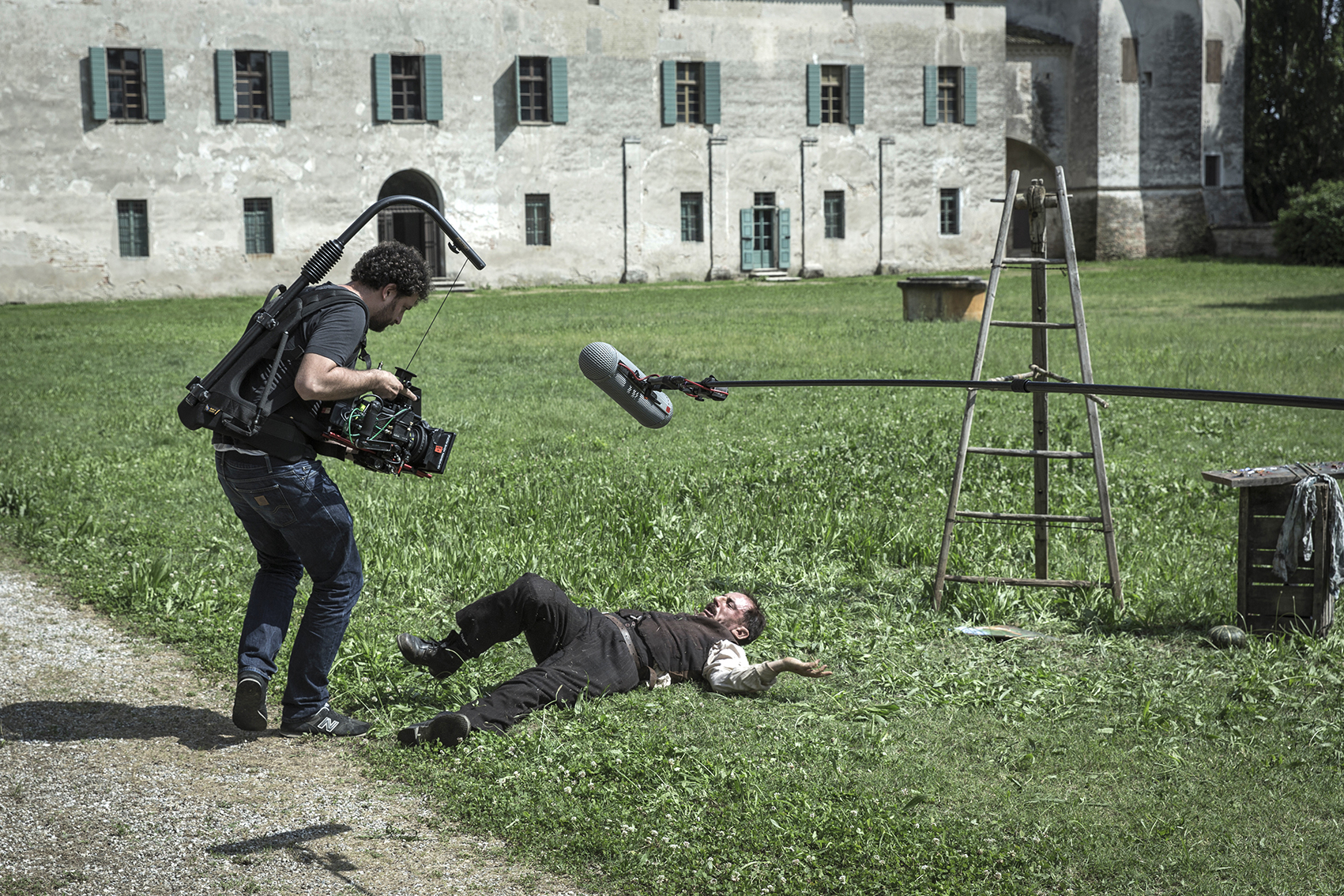
It was essential for me to have a small and compact camera, as we always worked in real or adapted environments. The lightness of the camera meant that it could be mounted in any location and position. The workflow management was also a key factor in the choice. My DIT, Lorenzo Capra, took care of all the material on set, monitoring the delicate management of the images with Laserfilm laboratory in Rome.