1-arri-alexa-35-dp-evgenia-alexandrova-interview-the-secret-agent

Evgenia Alexandrova AFC shoots “The Secret Agent” with ARRI’s ALEXA 35

Cinematographer Evgenia Alexandrova AFC describes her work on Kleber Mendonça Filho’s film, which won Best Director at the 2025 Cannes Film Festival.

Nov. 26, 2025

Selected for the Official Competition at the 78th Cannes Film Festival and taking home two awards including Best Director, Brazilian director Kleber Mendonça Filho’s “The Secret Agent” was shot in Brazil by cinematographer Evgenia Alexandrova AFC. For her second feature using the ALEXA 35, Evgenia opted for anamorphic lenses to create a 1970s look. She speaks here about the aesthetic and technical choices that shaped her approach.

How did you get involved in this project?

I previously worked on a Brazilian film called “Heartless,” directed by Nara Normande and Tião. Kleber saw it and really liked the cinematography, especially how we captured Brazil’s colors without “exoticizing” them—which was exactly what he was looking for in “The Secret Agent.” We met, I read the script, and I loved it!
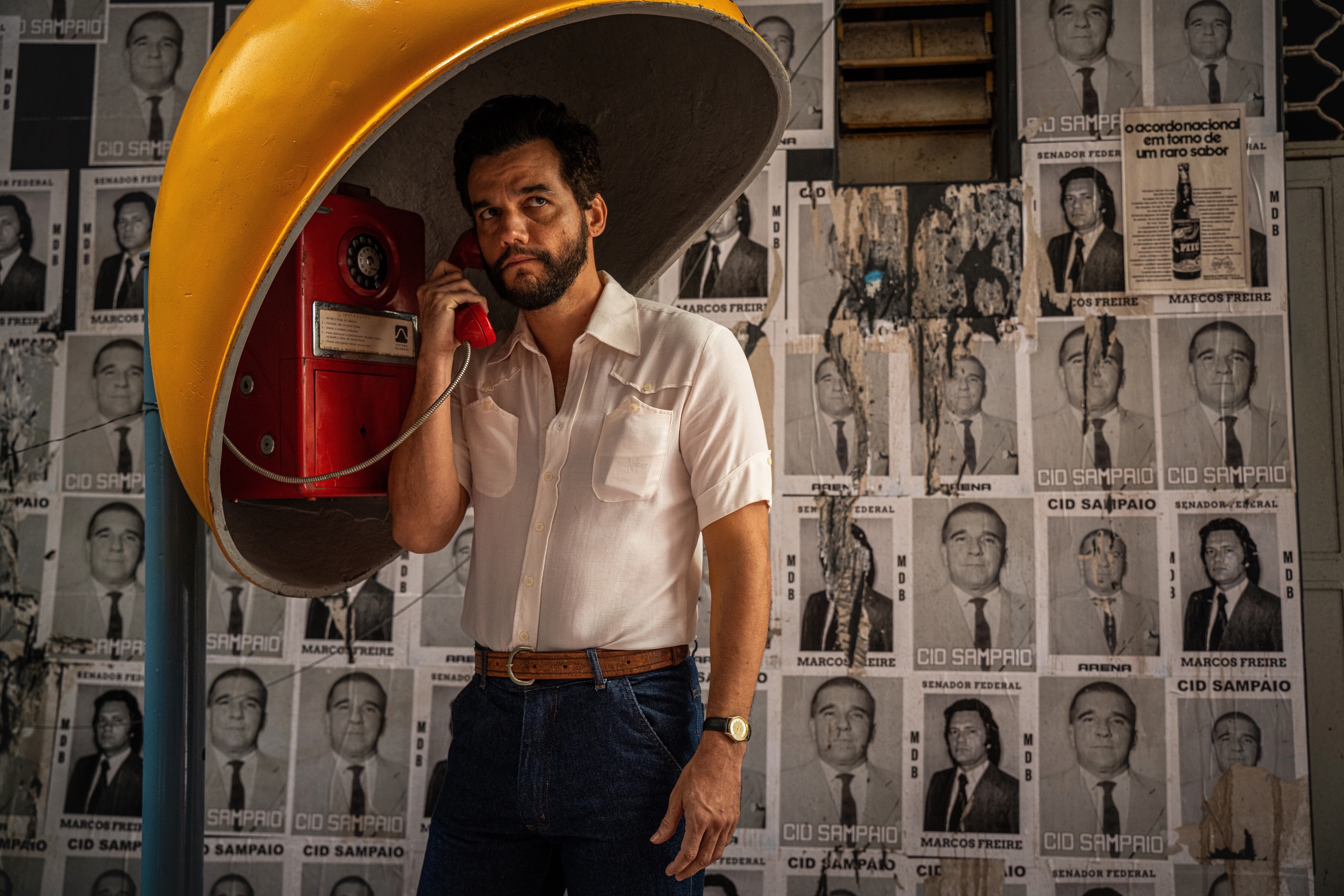
Wagner Moura plays Marcelo Alves, the secret agent of the film’s title

Wagner Moura plays Marcelo Alves, the secret agent of the film’s title

So, you had an idea of what the director wanted, but how did you fully develop the look?

Kleber wanted an organic, natural look. He didn’t want it to seem forced, but he did ask for our look to complement the storytelling while adding a vintage touch, with imperfections evocative of period films, since “The Secret Agent” takes place in the 1970s. He sent me several references, which I used to prepare a LUT with colorist Vincent Amor from Poly-Son ahead of the shoot, and brought it to the set.

We paired the ALEXA 35 camera with Panavision B Series lenses, which have slight aberrations that react strongly to flares. The flares were very hard to control, but that’s exactly what Kleber loved: he wanted the audience to feel the craft of filmmaking. Likewise, some shots are intentionally unstabilized, embracing small imperfections of camera movement, because that adds to the character.

The film closely followed the script; its shot list was precise, but Kleber gave me a lot of creative freedom. He had strong technical ideas—we would add or enhance things, but he knew exactly what he wanted.
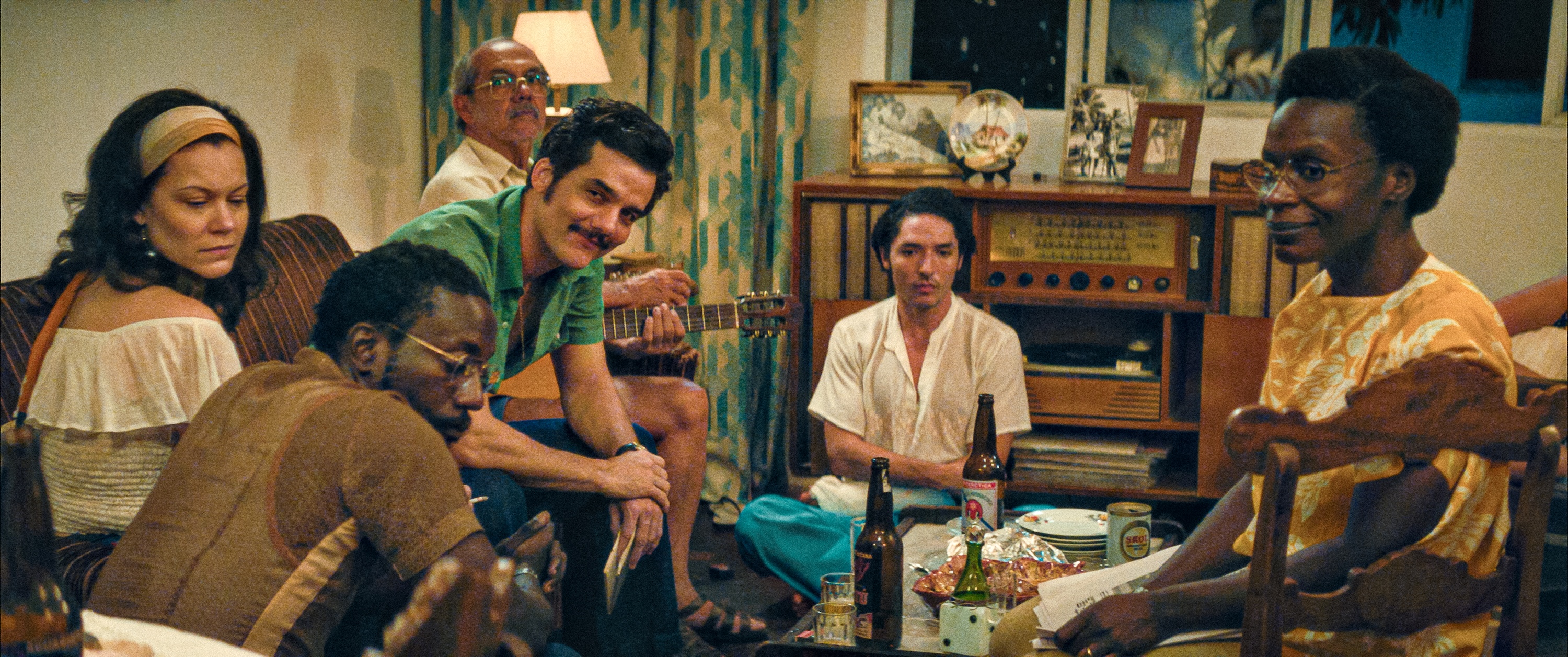
A LUT developed during preproduction accentuated the 1970s look, as did the choice of older anamorphic lenses

A LUT developed during preproduction accentuated the 1970s look, as did the choice of older anamorphic lenses

How did you decide on the equipment?

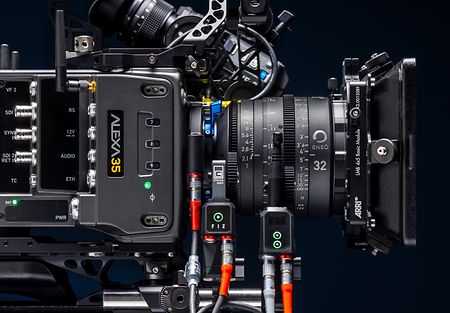
All the camera gear came from France; lighting and rigging were sourced locally. For me, the ALEXA 35 was an obvious choice. I had first used it on “Les Femmes au Balcon” and I was impressed by what it gave me in the color grade. For “The Secret Agent”—given Kleber’s desire for a textured, natural image—the ALEXA 35 was the clear choice. Our B-camera was an ALEXA Mini.

The ALEXA 35 performed beautifully. I had realized its capabilities in high-contrast situations on “Les Femmes au Balcon,” with many scenes filmed under a scorching Marseille sun, often over- or underexposed. I was amazed by how much the camera could handle. For the strong Brazilian light of “The Secret Agent,” it was perfect.
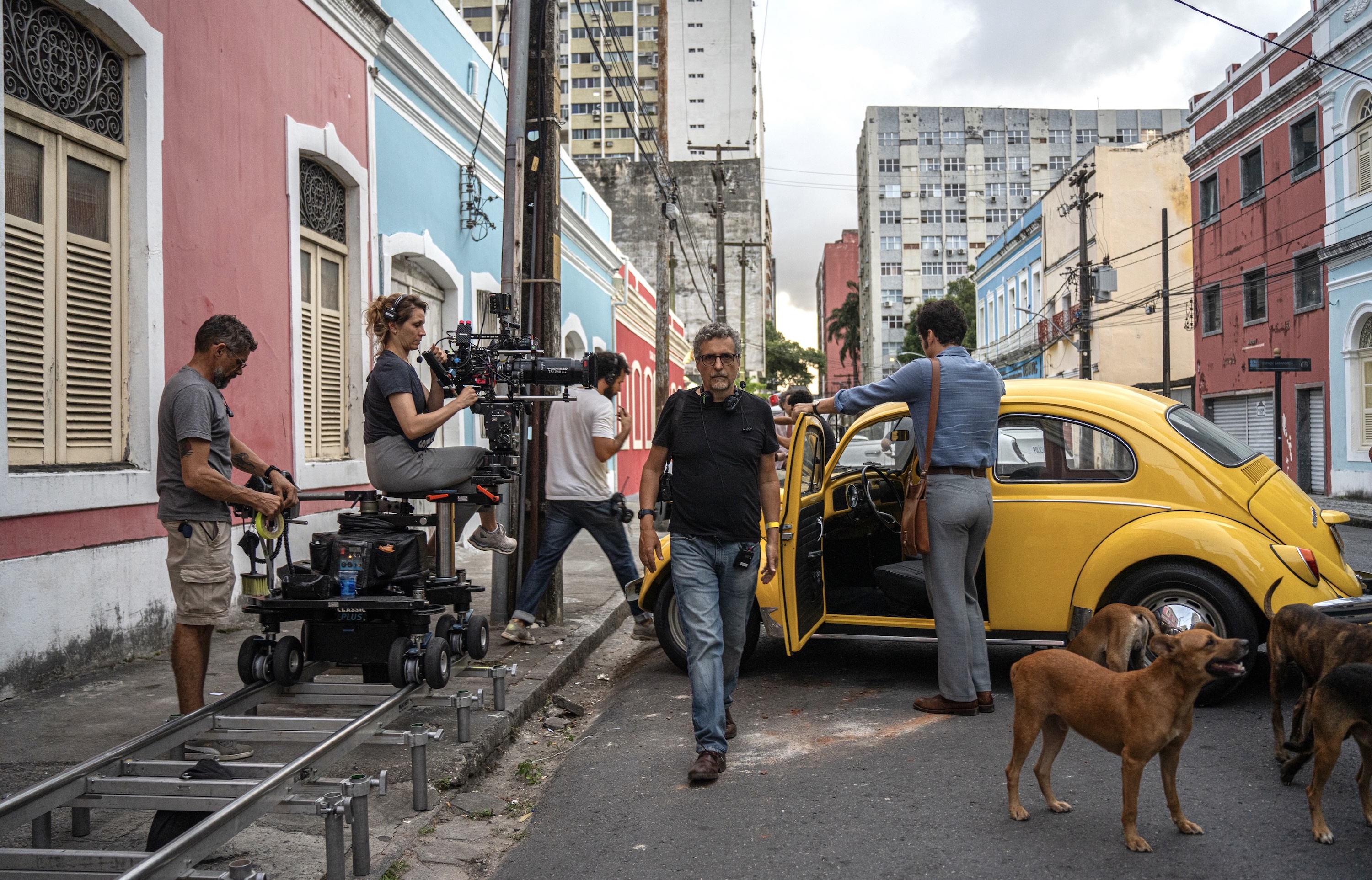
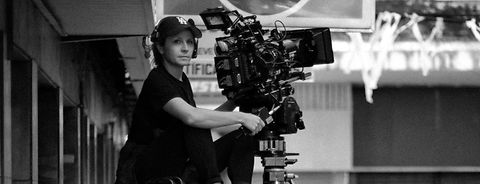
Cinematographer Evgenia Alexandrova AFC with the ALEXA 35 on a dolly, preparing one of the production’s many tracking shots

Cinematographer Evgenia Alexandrova AFC with the ALEXA 35 on a dolly, preparing one of the production’s many tracking shots

You mentioned unstabilized shots. What else guided your camerawork?

Kleber isn’t a big fan of handheld, so there actually wasn’t much of that. But he loves tracking shots—we did kilometers and kilometers of them. I also chose the ALEXA 35 for its ergonomics: a compact camera was essential for car scenes, allowing us to mount it on a hood or door. The ALEXA 35 and Mini complemented each other. The 35 is more nuanced with its wide dynamic range, while the Mini has more pronounced stops, more contrast, and perhaps more character. In certain situations I must admit that I preferred the Mini’s look.
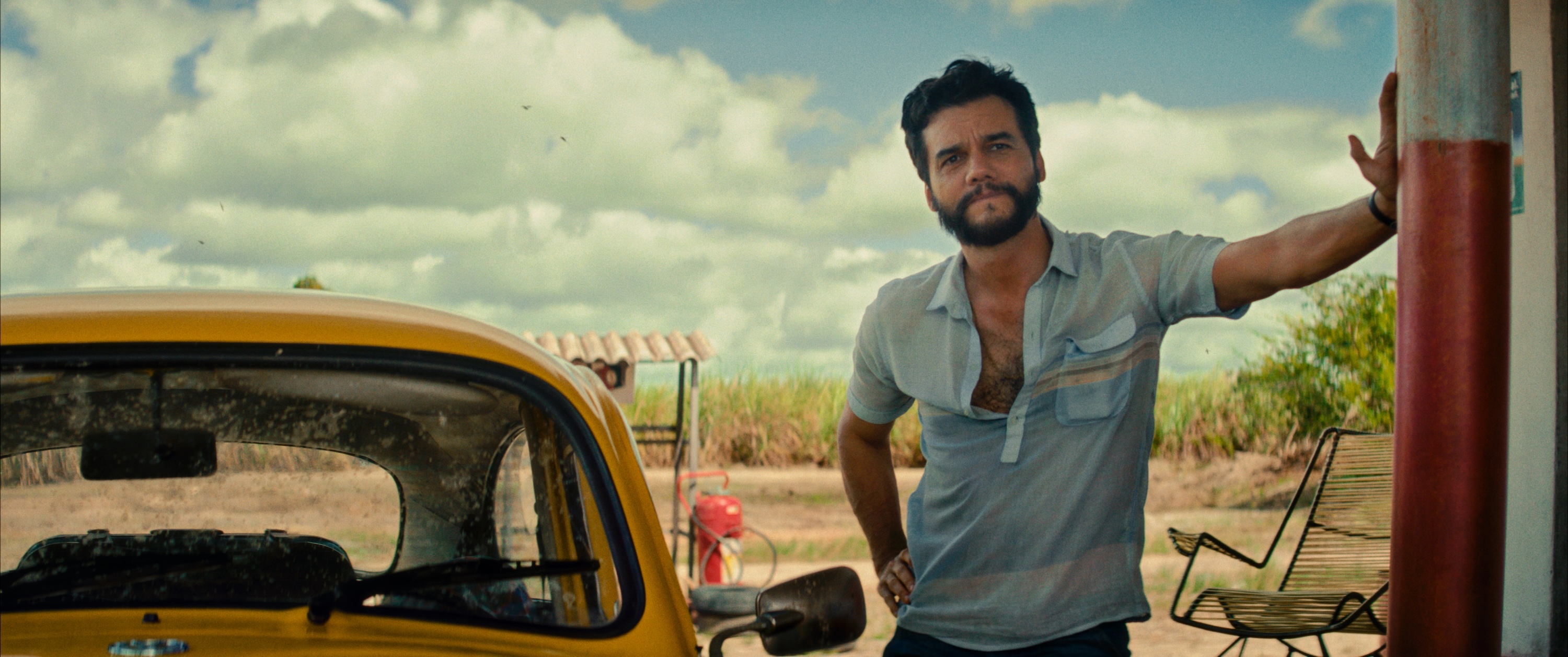
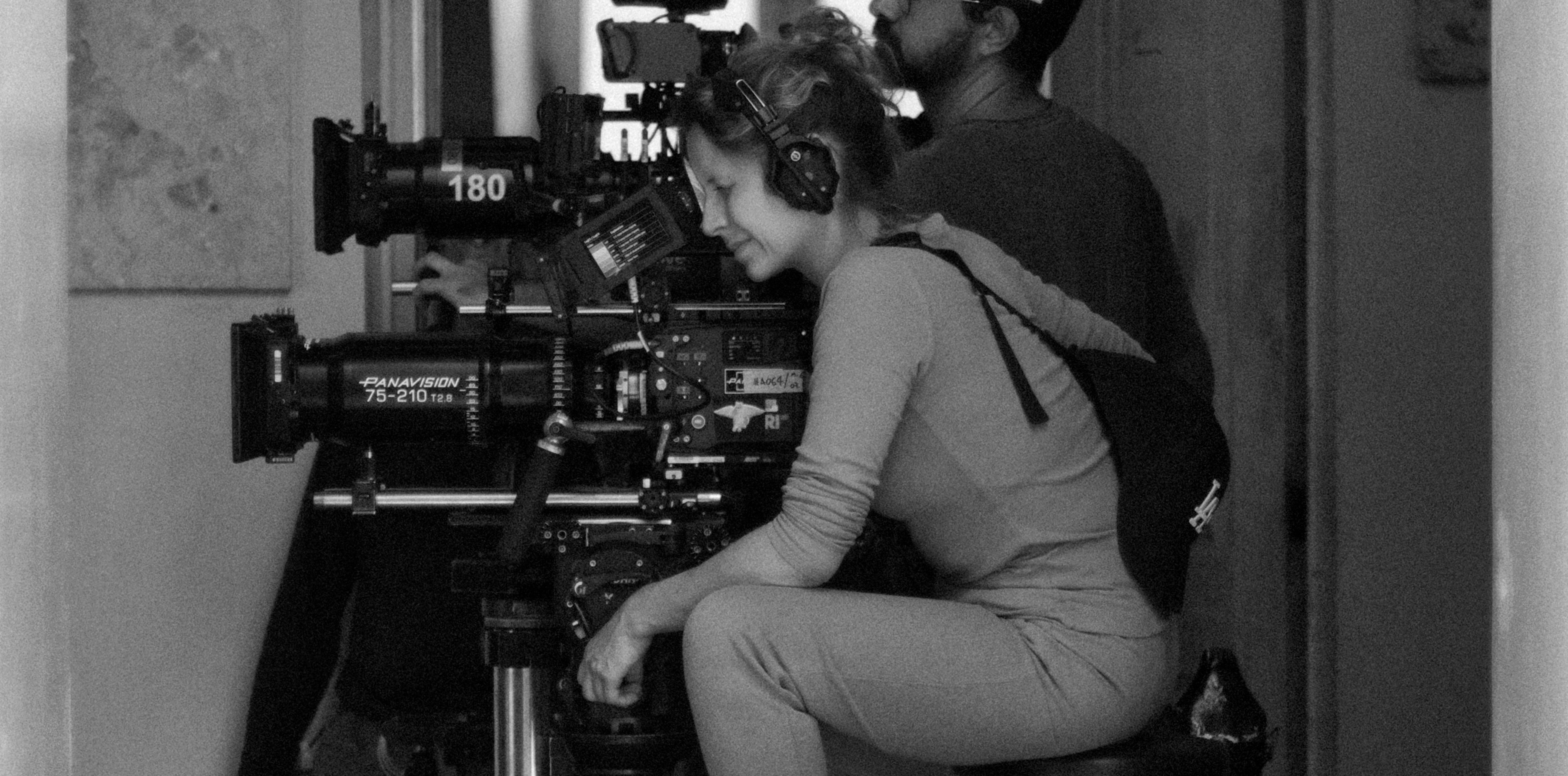
For ‘The Secret Agent,’ given Kleber’s desire for a textured, natural image, the ALEXA 35 was the clear choice.

Evgenia Alexandrova AFC

Cinematographer

Are you a fan of shooting with anamorphic lenses?

This was my first time shooting anamorphic. We also used a 100 mm L Series lens, which had quite a blurry effect that was visible in some shots where the focus fell away sharply, adding to the film’s charm. Sometimes characters are at the frame edges and the fall-off means their faces are not in focus. I discussed it with Kleber, and since he liked it, we kept it.

Anamorphic bokeh is very appealing. One of Kleber’s favorite moments is during the airport scene: a wide profile shot as two killers arrive in Recife, accompanied by a lateral tracking shot. We were facing windows and huge flares hit the characters’ faces. He loved it—it was exactly what he wanted.

Director Kleber Mendonça Filho attended the grade to ensure the colors were true to his memory of 1970s Brazil

Director Kleber Mendonça Filho attended the grade to ensure the colors were true to his memory of 1970s Brazil

Were any aspects of the shoot particularly challenging for you?

The entire film was a challenge! We had 10 weeks to shoot 180 pages of script, so it was a race. I do recall one scene where the main character, played by Wagner Moura, learns he’s being hunted while in a cinema. He sees the trailer for “Le Magnifique” starring Jean-Paul Belmondo, then leaves to join the carnival. It was simplified in editing, but we shot it as a long take. Tracks were installed in the cinema and extended outside, following the character. It was technically complex passing through doors, tracking him from behind and then in front.

Once outside the cinema, the character joins the carnival. There were about a hundred extras dancing and playing music; the camera had to rise up and lose him in the crowd. It was magical—the music was loud, the rhythm intense, and they were throwing powder and flour everywhere. I literally lost Wagner in the crowd, and my camera assistant had to tell me on the walkie-talkie where he was.

“For me, the ALEXA 35 was an obvious choice,” says the cinematographer

“For me, the ALEXA 35 was an obvious choice,” says the cinematographer

How was the color grading process?

We had two grading sessions: one before submitting the film to Cannes, and one for its final release. Kleber was always present in the grade. The film was co-produced by four countries, making postproduction complex: editing in Brazil, sound editing in the Netherlands, mixing in France, grading in Germany, and VFX in France and the Netherlands.

The second grading session with Dirk Meier mainly focused on checking VFX. Since it’s a period film, Kleber wanted precision—he had lived in Recife and wanted to recreate the city of that era. For some shots, he adjusted the color of the ground or wall hues to stay as faithful as possible to his memories.

What other techniques did you use to achieve the period look?

We used period techniques such as a split diopter filter, which we used for two specific shots. The first was when Wagner’s character reunites with his son, who is in the foreground, with Wagner in the deep background; we wanted to capture the emotion in their eyes while keeping both in focus. The second time was when the killer finds Wagner in the ID room—Wagner has his back turned, thinking about escaping. The focus is on him and also on the killer in the background.

Credit for main image: Ligia Tiemi Sumi