As the operator, this must have been taxing on you physically.
It’s exhausting. It’s very hard on the body. For me, it is very hard because I am not an actor so to remember all the cues, all the dialogue, when an actor is coming in the door…Sometimes I had to write down cues near my monitor, so as I was operating I was able with one eye to read cues, and with the other, check framing.
I don’t think we could have done this movie a year or two years ago. The ALEXA camera and the ALEXA M especially, allowed me to do handheld for so long. The fact that you can record media for so many minutes and also that the video system gets an image that is so clear for the director…It allowed us to do the movie. Otherwise, I think it would have been probably close to impossible.
Chris Haarhoff, our Steadicam Operator, he did amazing. I don’t know how he did some of the shots and at the speed he was doing them, sometimes walking backwards. Michael Keaton likes to speak very fast and walk really fast. When we were rehearsing the movie he said, ‘I’m worried that you guys are going to be walking backwards because I go fast.’ We rehearsed and Chris was able to do extraordinary work. You’ll see it.
How did you and gaffer Robert Sciretta approach lighting then?
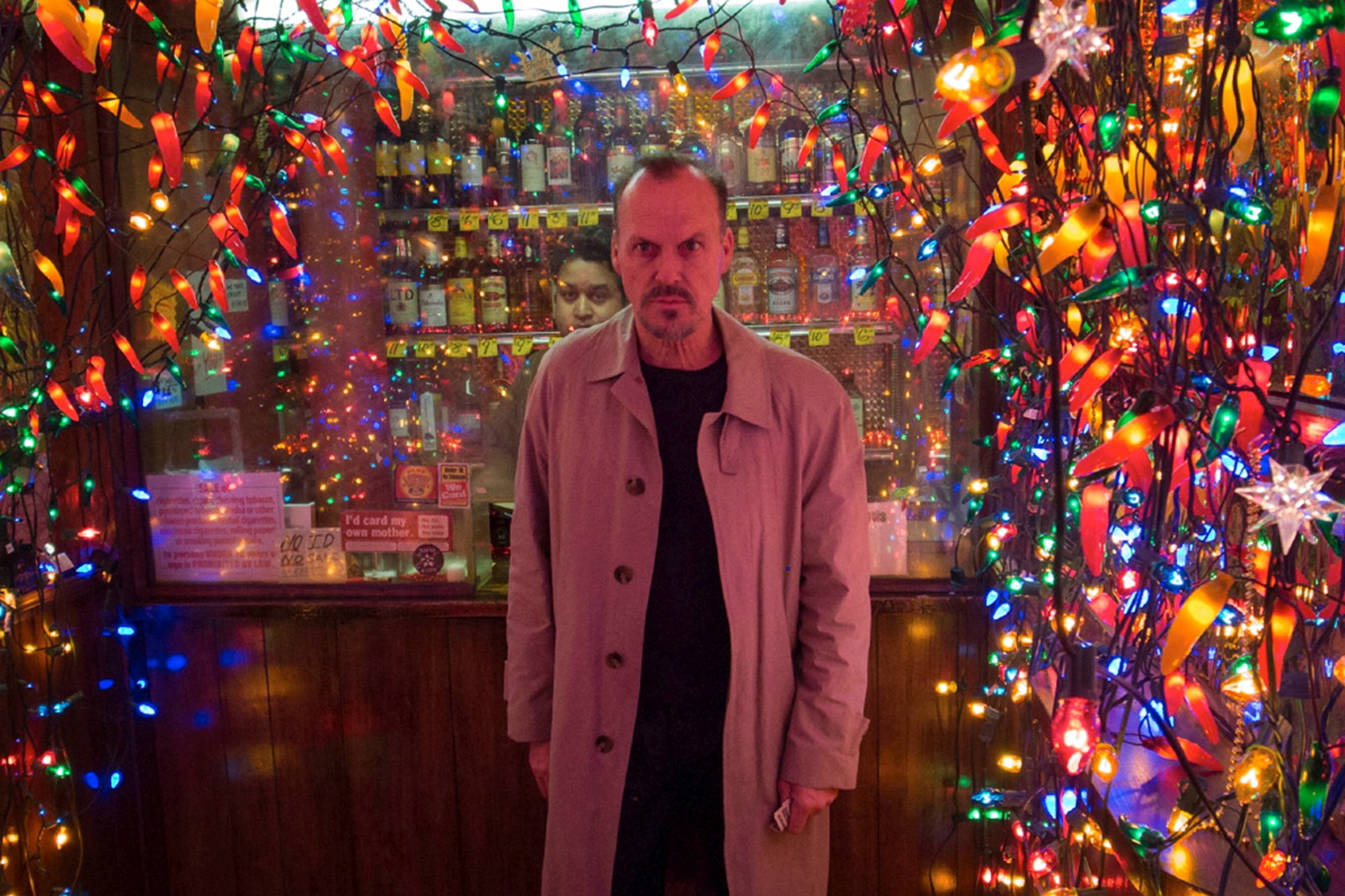
I wanted the movie to look as naturalistic as possible. We did not use movie lights. It’s all light bulbs. All the lights that you see in the set are the lights that are lighting the scene. These cameras allow us to do that because the dynamic range of the camera was able to capture the light bulb and the face of the actor without clipping. There is one scene where we used probably a 20K. It was outside a window in the stage to create the impression of daylight, but all the other lights are just lamps and practicals.