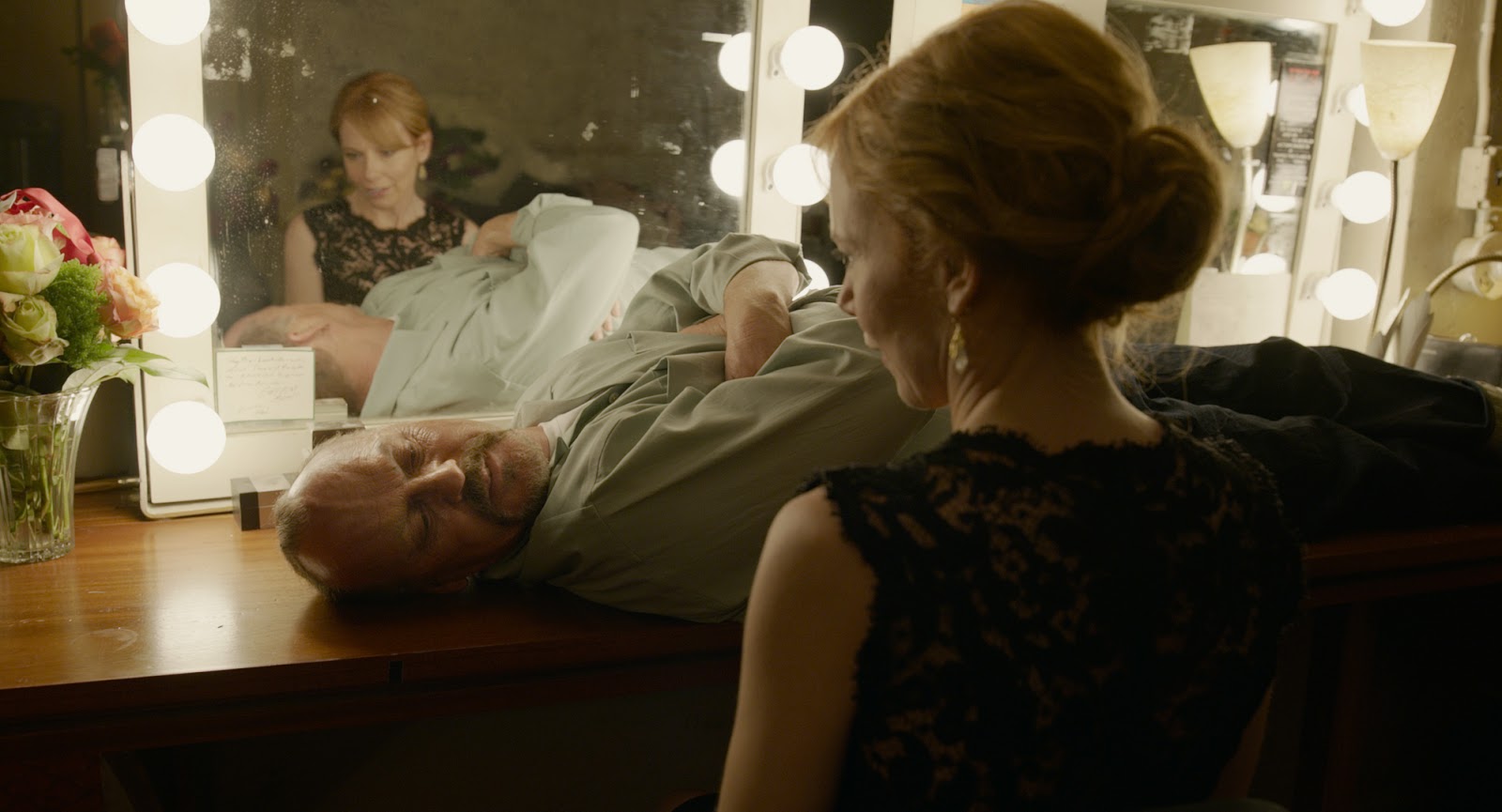
How did shooting long takes motivate the camera movement?
We were always thinking about what we wanted to see through Riggan’s eyes and what we wanted to see more objectively. It all started in the script writing and in the casting of the actors. Everything is very interconnected, otherwise it would have been impossible.
The movie is shot partly Steadicam and partly handheld. The camera is in constant motion. I really didn’t want to do the movie in one shot, I didn’t want the movie to feel like the tour de force of the filmmakers. I think it would have been dishonest, or gimmicky and we did not want the movie to be just gimmicky. I also wanted to be sure that we weren’t doing that just to do it, the camera movement was organic to the story. I hate the word organic, but it was really part of the story, part of the energy of the characters. It was important to me that it had to feel right, because it is something that you can fall out of very easily when you’re doing long shots. We added a couple of cuts, but the movements help get the audience into the world of the characters so the movie feels immersive and immediate.
In an empty stage we built with cloth and c-stands an idea of what the set was going to be. We started making the blueprints of what the shots and what the blocking of the scenes was going to be like. We worked probably a couple of months doing that with a handheld camera and stand-ins -- just making the overall plans on the blocking, the camera moves and figuring out how to do them.