COVID considerations played into the decision tangentially. Instead of taking over the entire field with an instant stage setup, a fixed platform was built at one end of the stadium. That allowed for more thorough rehearsals beforehand with camera gear in position from the get-go. “With no crowd on the field, I didn’t have to use a load of Chapman cranes 50 feet away from the stage,” says Hamilton. “I could have the cameras closer to the talent, which I’ve never been able to do on this kind of show. That also played into the decision to use ARRI.”
Prep included extensive conversations about maintaining an appropriate balance between a cinematic aesthetic and a sense of a live event energy.
“We couldn’t go too extreme in the look,” says Hamilton. “After all, we’re in the middle of a football game! We didn’t want it to look like video or feel too processed or treated, but we had to make it feel live. At the same time, we wanted to give it a strong look with a sense of art, a sense of it living separately from the game, as entertainment.”
The team also carved out a relatively luxurious 45-minutes for dialing in LUTs and looks. “The ARRI cameras have such scope,” says Hamilton. “There are so many things you can do differently—such as the ability to change and create scenes and lighting cues,” says Hamilton. “We made sure to put this great technology in service of the story we were telling.”
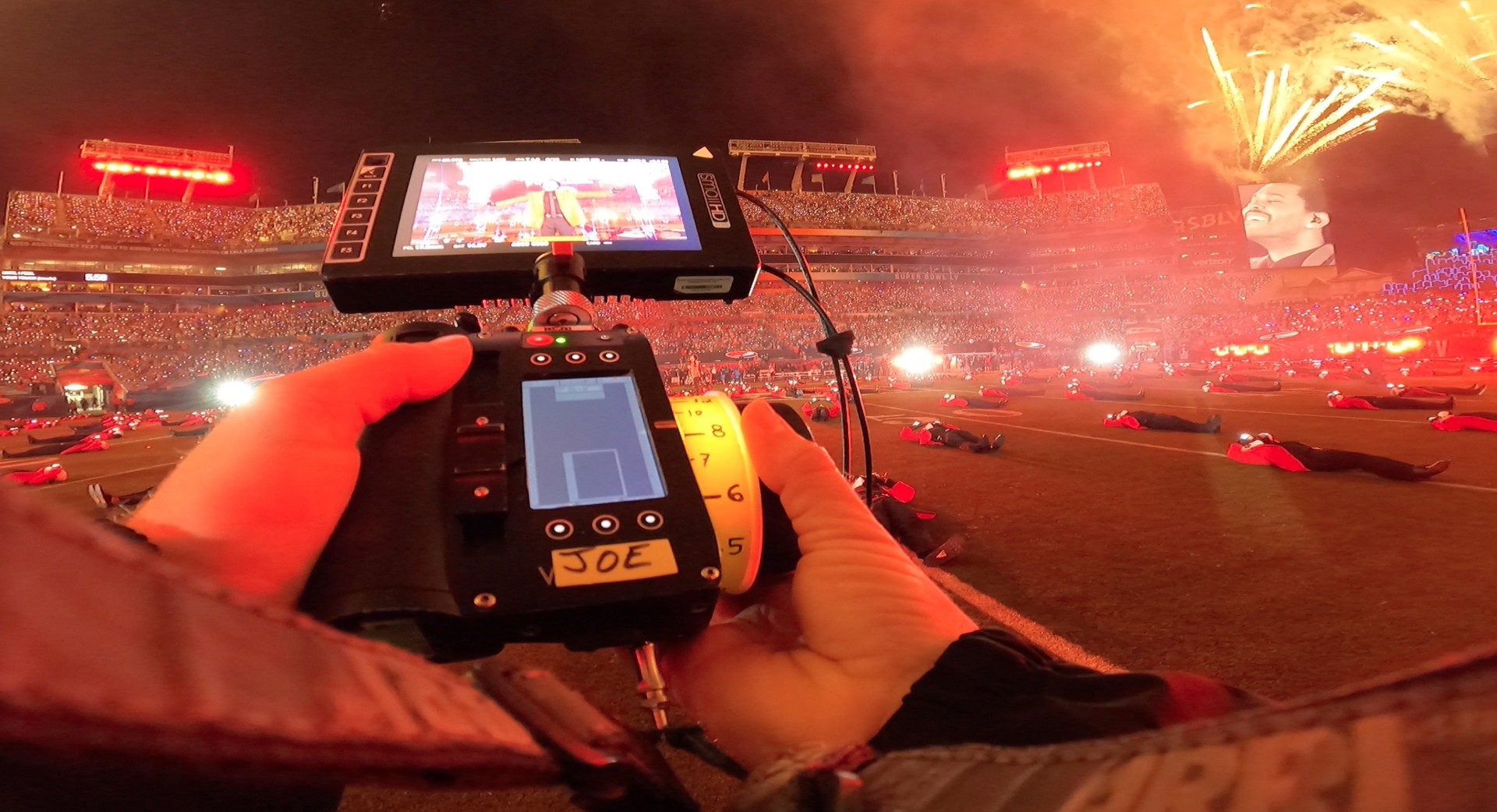
The camera array was built around two primary positions, arranged in a stack formation and mounted on a track. The main closeup camera was at the downstage edge, with a slightly wider lens on the second camera getting a looser, full-body shot from a slightly lower angle. A third camera was mounted relatively close on a tower rig. All of the ALEXA Minis had dedicated focus pullers, a hallmark of cinematic camerawork, and a key to controlling depth of field. Tampa-based Joseph K. Boylan was one of the focus pullers at this year’s Super Bowl Halftime Show. Of the WCU‑4, he says, “I’ve been using the WCU‑4 since it became available. On this year’s Halftime Show with The Weeknd we used ARRI Minis and RF motors, for focus, to communicate with the WCU‑4. The WCU‑4s performed perfectly with no interference from outside sources inside the stadium.”