1-interview-adib-sobhani-woman-and-child-alexa-35-arri copie

Adib Sobhani shoots “Woman and Child” with ALEXA 35

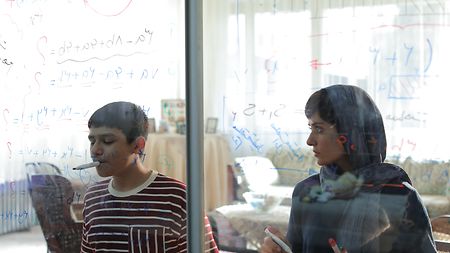
DP Adib Sobhani joins director Saeed Roustayi for “Woman and Child,” an Iranian feature selected for the Main Competition at the 2025 Cannes Film Festival.

Feb. 24, 2026

At the 2025 Cannes Film Festival, cinematographer Adib Sobhani spoke with ARRI about how he recreated a full year of Tehran’s seasons while shooting exclusively in winter. He discussed the visual style he pursued for “Woman and Child” and his choice of the ALEXA 35 camera with the High Clarity ARRI Texture, as well as SkyPanel X and Orbiter lights.

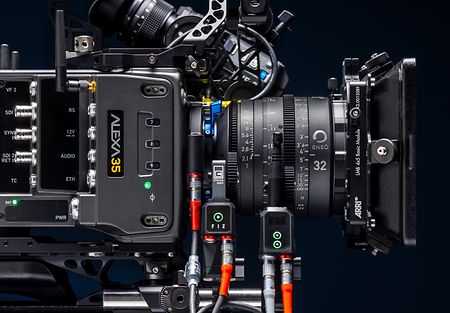
The ALEXA 35’s image quality allowed Adib to capture every detail with a clarity that he describes as being close to that of the human eye.

The ALEXA 35’s image quality allowed Adib to capture every detail with a clarity that he describes as being close to that of the human eye.

How did you get involved in this project?

I became involved after reading the script and having a long conversation with the director. I felt there was a strong shared vision regarding the tone and visual approach, and what really drew me in was the emotional core of the story.

What kind of a look were you looking for?

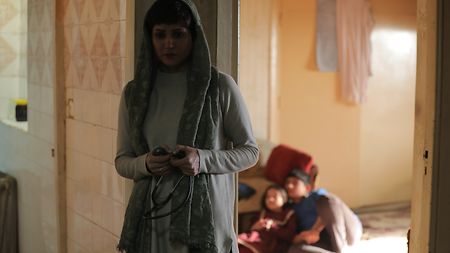
We were going for a grounded, naturalistic look that reflects the everyday reality of women in Iran. We wanted to show everything exactly as we see it in Tehran—the colors, the light, even the temperature and the qualities of the climate and geography. We avoided overly-stylized visuals and instead focused on authentic lighting and muted tones to keep the emotions raw and honest.
 

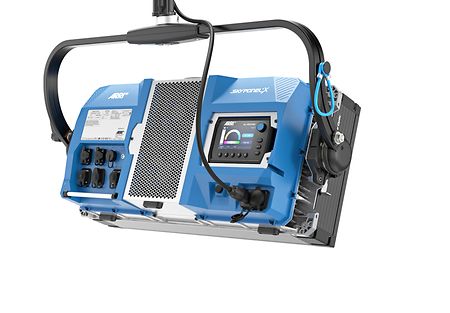
I consistently rely on the Orbiter and the SkyPanel X, as they offer optimal lighting solutions that adapt to our needs.

Mostafa Sadeghi

Gaffer on “Woman and Child”

Were there any inspirations or references for your cinematography?

The main inspiration came from the story itself, and most of the visual ideas stemmed from my talks with Saeed. We discussed rhythm, perspective, and the ways camerawork can reflect the emotional tension of the story, because the camera doesn’t just record incidences, it can convey the psychological state of the characters. I wanted the cinematography to be honest and controlled, and above all to serve the emotional trajectory of our characters.

What were the key challenges you faced on this shoot?

We shot the whole film during winter, over a three-month period, entirely in Tehran—at indoor and outdoor locations including schools and hospitals. Shooting in winter while telling a story that spans all four seasons was a major challenge, especially for summer and autumn. Tehran’s winter days are extremely short, and the city’s dense architecture blocks natural light even earlier, making daylight scenes particularly difficult.

Overcoming this challenge required precise planning and creative lighting solutions to maintain both seasonal continuity and emotional coherence. For the atmosphere of winter and fall, ARRISUN units were ideal thanks to their ability to replicate natural sunlight. To recreate the harsher, brighter quality of summer light, I used SkyPanel X fixtures combined with the HyPer Optic accessory. This lighting strategy was essential for keeping the film’s naturalistic tone while still marking the subtle shift between seasons.

Adib and his gaffer, Mostafa Sadeghi, relied on the SkyPanel X and its HyPer Optic to recreate the summer light of Tehran.

Adib and his gaffer, Mostafa Sadeghi, relied on the SkyPanel X and its HyPer Optic to recreate the summer light of Tehran.

You shot with the ALEXA 35. Why did you choose it for this production?

The ALEXA 35 was the best choice for us because its image quality is remarkably close to the human eye and captures every detail with clarity—exactly what Saeed and I were looking for. Most of the film was shot handheld, as Saeed wanted to convey a strong sense of tension and immediacy, and the ALEXA 35 is perfectly designed for that, with excellent ergonomics and stability.

On top of its visual capabilities, the ability to control the ALEXA 35 remotely via a mobile app is a major advantage, especially in situations where physical access to the camera is difficult or unsafe, such as on scaffolding or in confined spaces. Altogether, it proved to be a reliable and loyal tool that played a key role in achieving the film’s visual ambition.

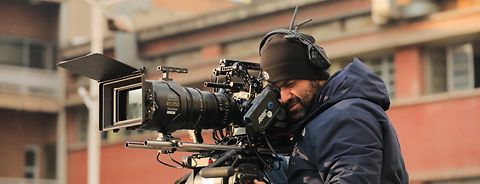
In my opinion the ALEXA 35 is one of the best cameras out there for shooting realistic night scenes.

Adib Sobhani

Cinematographer

How did the ALEXA 35’s sensitivity and dynamic range support you in both low-light and high-contrast environments?

We shot nearly half of the film at night, and the camera proved remarkable in both bright and low-light conditions, capturing all the details perfectly. In my opinion the ALEXA 35 is one of the best cameras out there for shooting realistic night scenes. In the past, we always had trouble filming at night and had to rely a lot on artificial lighting. But that problem was completely solved with the ALEXA 35. The camera’s high sensitivity and its ES option helped me shoot in very low light, without sacrificing image quality.

The ALEXA 35’s wide dynamic range—which for cinematographers is truly a blessing—allowed for capturing fine details in the darkest shadows and the brightest highlights without losing any information. Even in challenging lighting conditions the camera maintained very low noise and excellent color fidelity thanks to its REVEAL Color Science. We had a scene in a residential complex where most of the lights were broken and couldn’t be fixed. When I saw the footage in postproduction, I was really surprised by how little noise there was—it looked like it was shot at EI 800.

These capabilities enabled us to shoot realistic scenes using natural light, effectively conveying the atmosphere of the story. On set, the ALEXA 35 gave me confidence in handling both highlights and shadows without worrying about overexposure or underexposure. This not only ensured better image quality but also saved a lot of time and energy, allowing me to focus on other creative aspects of the shoot.

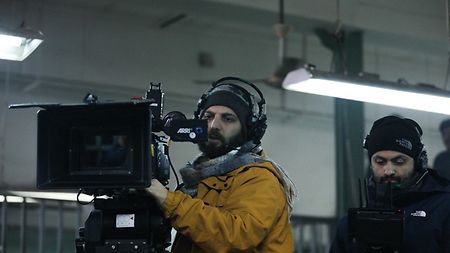
Director Saeed Roustayi (left) and DP Adib Sobhani with the ALEXA 35 on the set of “Woman and Child.”

Director Saeed Roustayi (left) and DP Adib Sobhani with the ALEXA 35 on the set of “Woman and Child.”

How much did you build your color look on set and how much in post?

We used a custom LUT on set for monitoring but kept the ARRIRAW image data untouched for post. Every day after shooting I went to the lab to watch the dailies, discuss them with my colorist Farbod Jalali, and test a few LUTs to see how close we could get to a film stock feel. The High Clarity ARRI Texture felt like a hidden tool inside the camera, providing a kind of freedom and precision that, until now, existed only in grading. We used the High Clarity texture because we needed that level of sharpness, especially when we wanted to bring it closer to negative film and film emulsion. We intentionally tried to blur certain areas, for example some of the highlights, to which we added halation.

The material was then brought into DaVinci Resolve for color grading, where we had full control over the image thanks to the flexibility of the ALEXA 35 files and ARRI’s REVEAL Color Science. This pipeline allowed us to maintain a consistent look while having the freedom to make nuanced adjustments in post. It was a reliable, streamlined process that served the story and our visual goals very well. I would like to sincerely thank ARRI for developing such an innovative and reliable camera system. The ALEXA 35 truly expanded our creative possibilities and helped us tell our story with honesty and precision.

Opening image credit: Amir Hossen Shojaee