
3 out of 5 nominated films for Best Cinematography captured with ARRI cameras
As a camera designer and manufacturer, ARRI always pays very close attention to the Achievement in Cinematography award. This year, three out of the five contenders in this category chose to capture their masterpieces, at least partially, with ARRI cameras. These films were “El Conde,” filmed by DP Edward Lachman, ASC; “Killers of the Flower Moon” lensed by Rodrigo Prieto ASC, AMC; and “Poor Things” shot by Robbie Ryan BSC, ISC. Congratulations go to cinematographer Hoyte van Hoytema NSC FSF, ASC, who was awarded the Oscar this year for his outstanding work on “Oppenheimer.”
There were a couple of interesting similarities this year amongst the Best Cinematography nominees. The first being that four out of the five contenders were shot on film. In fact, ARRI’s analog ARRICAM ST (Studio) and ARRICAM LT (Light) cameras were among this year’s Oscars most trusted tools. In addition, all five used a combination of color and black-and-white imagery, all to varying degrees. “El Conde,” the only contender that was captured digitally, is entirely monochromatic until its final colorful sequence. “Oppenheimer,” “Maestro,” and “Poor Things” all use black and white to signal different timeframes or to heighten states of mind. “Killers of the Flower Moon” offers the least amount of monochrome imagery with authentically simulated black-and-white newsreel footage of the Osage Nation (shot with Martin Scorsese’s 1917 Bell & Howell 2709 camera).
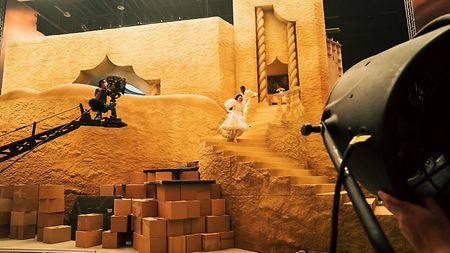
DP Robbie Ryan shot “Poor Things” on ARRI’s analog ARRICAM cameras which were trusted tools at the 2024 Oscars
Nominated for Best Cinematography and the lone film in the category to be shot digitally was Pablo Larraín’s black comedy/horror film “El Conde.” Two-time Oscar winning cinematographer Edward Lachman, ASC, chose to work with ALEXA Mini LF Monochrome supplied by ARRI Rental. Even though Lachman has earned recognition for certain projects that were shot on analog film, this time he opted for digital due to the lack of film labs near the location shoot in Chile. Most of the film was also in black and white. In an interview with ARRI Rental, Lachman explains: “The abstract and distant nature of black-and-white cinematography seemed right. The film uses the vampire genre as a literal and metaphorical way of telling a story about political upheaval in Chile in the 1970s.” ARRI Rental was able to provide two prototype ALEXA Mini LF Monochrome cameras to the production just in time for the start of principal photography. The success of the project led ARRI Rental to roll out the model more widely, and it can now be rented from facilities worldwide, alongside the existing ALEXA XT Monochrome and ALEXA 65 Monochrome models.
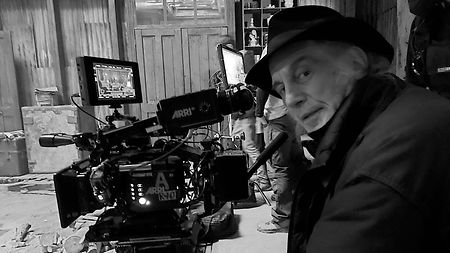
DP Edward Lachman shooting “El Conde”
The next two films shot on ARRI and nominated for Best Cinematography were also up for Best Picture and Best Director: “Killers of the Flower Moon” and “Poor Things.” In fact, three out of five nominated films in the category Best Directing also relied on ARRI.
From plastic, fantastical Barbie Land to an authentic recreation of a 1920s Osage reservation in Oklahoma, the shooting canvases couldn’t have been more different for director of photography Rodrigo Prieto ASC, AMC who lensed both “Barbie” and “Killers of the Flower Moon.” For the latter, veteran director Martin Scorsese together with Prieto chose to use various, mostly analog, cameras. The epic retelling of this true-crime western utilized a combination of analog and digital cameras but was primarily shot on 35 mm film using the ARRICAM ST and LT. In an interview with “British Cinematographer” Magazine, Prieto mentioned how the ARRICAM conveyed the right color palette for the film. He commented: “I try not to influence the director and just see what feels right for the movie. In this case, we felt shooting on film with the ARRICAM captured the colors in the best way.” ARRI Lighting was also behind the scenes on “Killers” with the18K ARRIMAX used when more intensity was needed while interior lighting relied partially on SkyPanel S360 and S60s.
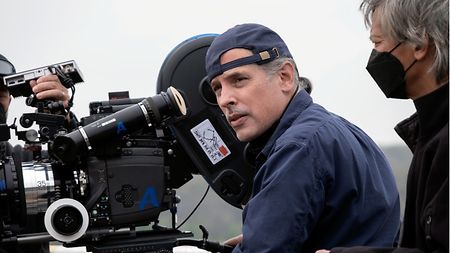
Rodrigo Prieto who chose mostly analog cameras for Scorsese’s epic “Killers of the Flower Moon”
“Poor Things,” the second film to come out of the creative collaboration between director Yorgos Lanthimos and Robbie Ryan BSC, ISC, premiered at the Venice Film Festival days before winning the event’s Golden Lion. At the Academy Awards, “Poor Things” was nominated in eleven categories and won four, including Best Actress and Best Production Design. Shooting on 35 mm film, Ryan worked with camera, lighting, and grip equipment supplied by ARRI Rental for “Poor Things.” Extensive lens testing was also facilitated by ARRI Rental. The film’s main camera was the analog ARRICAM ST which was sometimes augmented by an ARRICAM LT as a second camera. Much like the film’s main characters, Ryan’s camerawork is audacious. There are plenty of extreme wide-angle shots, impressive zooms, and unique vignetted “porthole” effects which never let the audience forget their role of voyeur, peering into another world. The film’s visuals mirror the fantastical story, and its cinematographer played with these various looks to heighten key moments. ARRI Lighting was also instrumental on the film’s various sets including SkyPanel S360 and S60 as well as BrikLoks. In an interview with ARRI Rental, gaffer Andy Cole spoke about how he and his colleague, gaffer Gromek Molnar Jr., lit the dramatic scenes at sea: “We had the LED wall on the ship set at Origo Studios in Budapest. We surrounded the ship with around 100 SkyPanel S60s and used 15 or 20 of the bigger S360 SkyPanels to light the glass roof and large back window.” For the Lisbon set, mainly SkyPanels were used, 800 pieces to be exact.
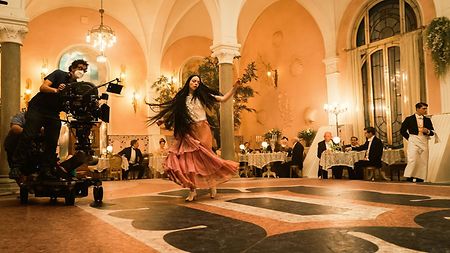
Robbie Ryan capturing Emma Stone’s Best Actress performance for “Poor Things” with the ARRICAM ST