Were there focal lengths that you used more than others?
Enola communicates directly with the audience by looking and talking into the camera. Harry and I felt that she almost needed to reach out her hand and pull the camera with her; she's basically saying, “Come along, follow me.” That was the underlying ethos in terms of the construction of scenes; we feel a connection with her because we’re going on the journey with her. It meant we had to spend time looking at exactly how wide the lenses that she communicates with should be – at what point there was something forced about the perspective, and at what point we felt we were naturally accompanying her.
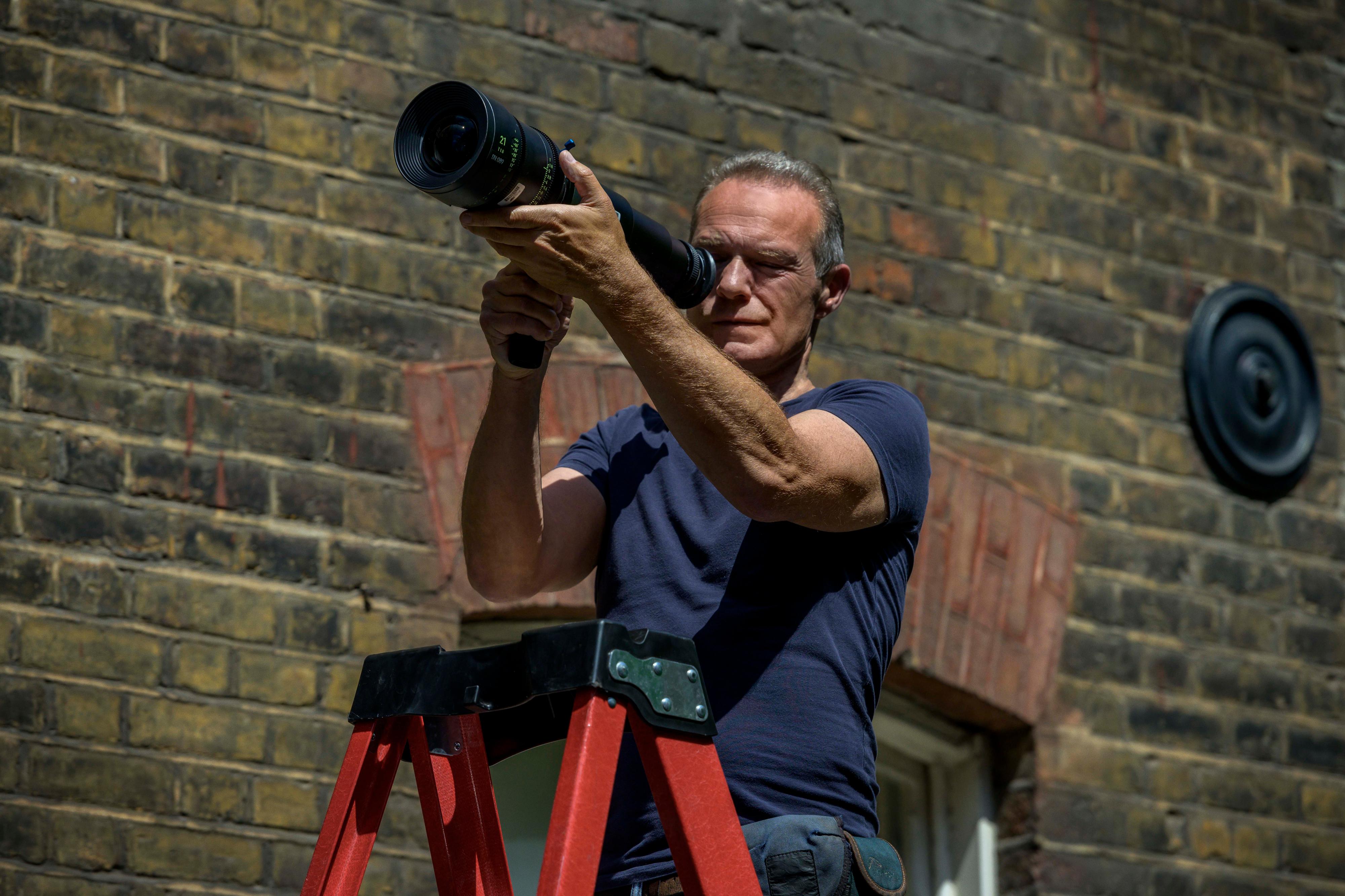
We loved the 21 mm, but it was just at the point where the perspective became noticeable for the audience. If you put somebody's face right into the lens, their nose is bigger, their ears are smaller, and the rest of the world is trailing away. In many situations the 29 mm Signature Prime was the ideal focal length, and it became our workhorse. At certain times we did use the 21 mm, especially when there was a lot of action. When you move with a wide-angle lens, you really see the movement, particularly at the edges of the frame. That helped us keep the camera energy up, to match that of Enola.
The great thing about the LF and the Signatures was that it was all very subtle; we were able to use relatively wide lenses, but without feeling we were looking at a forced perspective. You were close enough to her that you felt it was intimate, but you still saw all of the background, even if it was falling off slightly in focus.