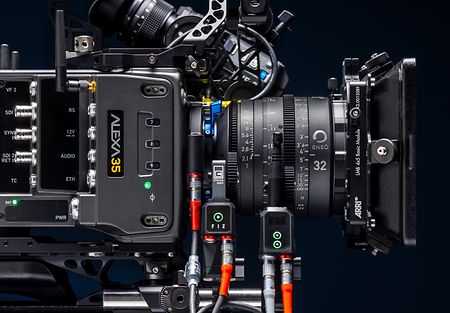
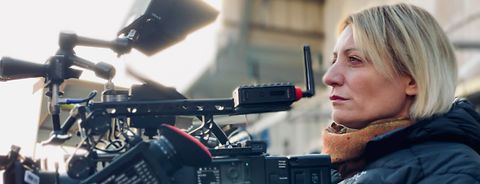
The first Italian woman to join the American Society of Cinematographers, Valentina Caniglia, ASC, CCS is an awardwinning director of photography whose journey spans from her native Naples to film sets around the world. Educated in London and New York, she has built an international career across feature films, television, documentaries, commercials, and music videos, with work presented at major festivals including Sundance, Cannes, Berlin, and Locarno. Guided by a visual passion deeply rooted in art, and shaped through challenges and pivotal encounters, Caniglia’s cinematography is defined by an expressive use of light, composition, and movement—bringing together technical mastery, emotional depth, and a commitment to inclusive collaboration in service of story and character.
How did your passion for cinema begin, and how did your academic path develop?
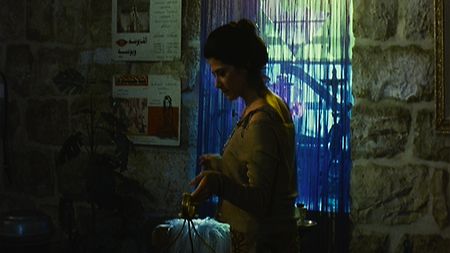
My parents passed on their passion for cinema to me: they both loved auteur films. At home we watched Pasolini and Elio Petri, who is one of my favorite directors. My parents showed me “The Conformist,” shot by Vittorio Storaro, and I was blown away by the lighting, the framing, and the camera movement. That’s when I realized I wanted to become a director of photography, even though it was a profession that was not very accessible to women. An image from “Pomegranates and Myrrh” shot by Valentina Caniglia on Super 16mm with an ARRIFLEX 16SR 3
I was born and raised in Naples. Just before I turned 18, I moved to London and studied for two years at Westminster College, focusing on cinematography and production. At the same time, I earned another degree in psychology. As I was about to complete that program, one of my teachers—without telling me—began preparing the paperwork to help me obtain a scholarship in the United States, sensing that I might have opportunities at American universities. I had looked into NYU and USC, but they were too expensive. London, at the time, being in Europe, was more affordable.
A Palestinian film, “Pomegranates and Myrrh” by Najwa Najjar, changed my life and my career. I met a Moroccan director at a party in New York, and she introduced me to Najwa; I read the script and three days later I was on the other side of the wall, in Palestine, during the Third Intifada. The film was co-financed by Germany, Italy, and France: The German crew couldn’t get in, but I could—I arrived alone. It was an incredibly intense encounter of cultures and humanity.
Working with the American director Richard Ledes also had a major impact on me: our last film together, shot in black and white about Lacan’s life, featured highly considered, carefully composed frames. It was a cinema of freedom that coexists with planning.
Do you think you have a visual “signature,” or do you adapt to the story?
For me, there's no such thing as “beautiful” or “ugly” cinematography—only the right cinematography for the story you want to tell. What interests me is creating images that live within the narrative, not above it. Directors and colleagues have often told me they recognized a frame or a lighting setup as “mine,” even without knowing that I was behind the camera. I believe that recognition lies my heart, more than a signature. Every project is different, but a personal touch always returns, naturally, like a visual imprint born from the emotion I put into my work.
How do you build the look of your films, and what are your visual inspirations?
When I build the look of a film, I always start with the script: every scene is like a painting to me. I rarely draw inspiration from other films because painting speaks to me more deeply. I listen closely to the director, try to enter their world, and together we build a visual journey. From a technical standpoint, my first choice is always the lenses, because they define the point of view, depth of field, and bokeh. Next, I pair the right camera with the lenses, creating a combination that serves the needs of the story. I enjoy changing genres and formats, and I always adapt the style to the narrative.
Among my visual inspirations are Artemisia Gentileschi and Caravaggio, for their use of chiaroscuro [an artistic technique that uses strong contrasts between light and shadow to create a sense of depth, volume, and emotional intensity], which I consider a true expressive language. Sometimes I’m drawn to Picasso, especially from his Blue Period. Among contemporary artists, I’m inspired by Gerhard Richter for his fusion of classical and modern, Basquiat for the power of his colors, and Kara Walker for her work with silhouettes and backgrounds. I always choose based on the story and the type of emotional contrast I want to bring out.
What is your relationship with the crew like—do you have a regular team, or do you like to change?
Working all over the world—from Jordan to London, from India to Italy and the southern United States—I often end up changing teams and collaborating with local crews. I believe adapting to new contexts is essential, for practical and cultural reasons as well as for budget, but also because every set is an opportunity for growth, both for me and for the people working alongside me. Changing teams comes with risks, but it’s also a valuable opportunity to give new people experience and to create entry points for the next generation. Experience has to be built someone has to give you your first chance. That’s why I often ask to be able to train and promote young people within the camera department—not hiring based on quotas or labels but aiming for real balance and for valuing skills and talent. If we don’t create concrete opportunities, generational turnover will never happen, and our craft risks not evolving.
You are the first Italian woman to join the ASC—how did it feel when you were asked?
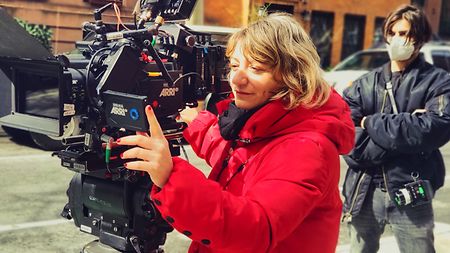
I was overcome with emotion. I joyously accepted when they offered me membership. It was a dream come true—I had always dreamed of those three letters. Early in my career, I never thought I was uniquely supported; I did everything on my own for years, without any connections. Maybe I made a mistake by not asking for help. Today I tell young people: Ask. You’re not bothering anyone. Valentina Caniglia on the set of “3 Days Rising”
Is there more room for inclusion in the United States?
In general, yes—but not enough. Even in the U.S., there are still very few directors of photography who work consistently. The solution is to build networks: if a DP is very busy, they can entrust a second unit to a young DP who can work alongside them and get a boost that could launch their career. Generosity always comes back, often in the form of human support when we pass through the low moments that touch us all. It’s true that there are fewer opportunities for women, but we must not victimize ourselves. We shouldn’t be hired because we are women; we should be hired for our talent, skill, ability, and experience.
Can you share one creative piece of advice, one technical, and one career-related?
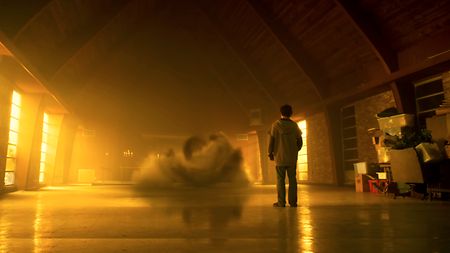
Creative: Follow a mentor if you can, but above all listen to your instinct and your heart. An image from “Quail Hollow,” directed by Javier de Prado, with cinematography by Valentina Caniglia
Technical: Learn the craft, then forget it on set. Rules exist to be broken when the story requires it.
Career: Never stop, ask for opportunities and give them to those who have fewer. Experience must be created, not demanded.
Opening image: copyright © Yazan Shabbak.