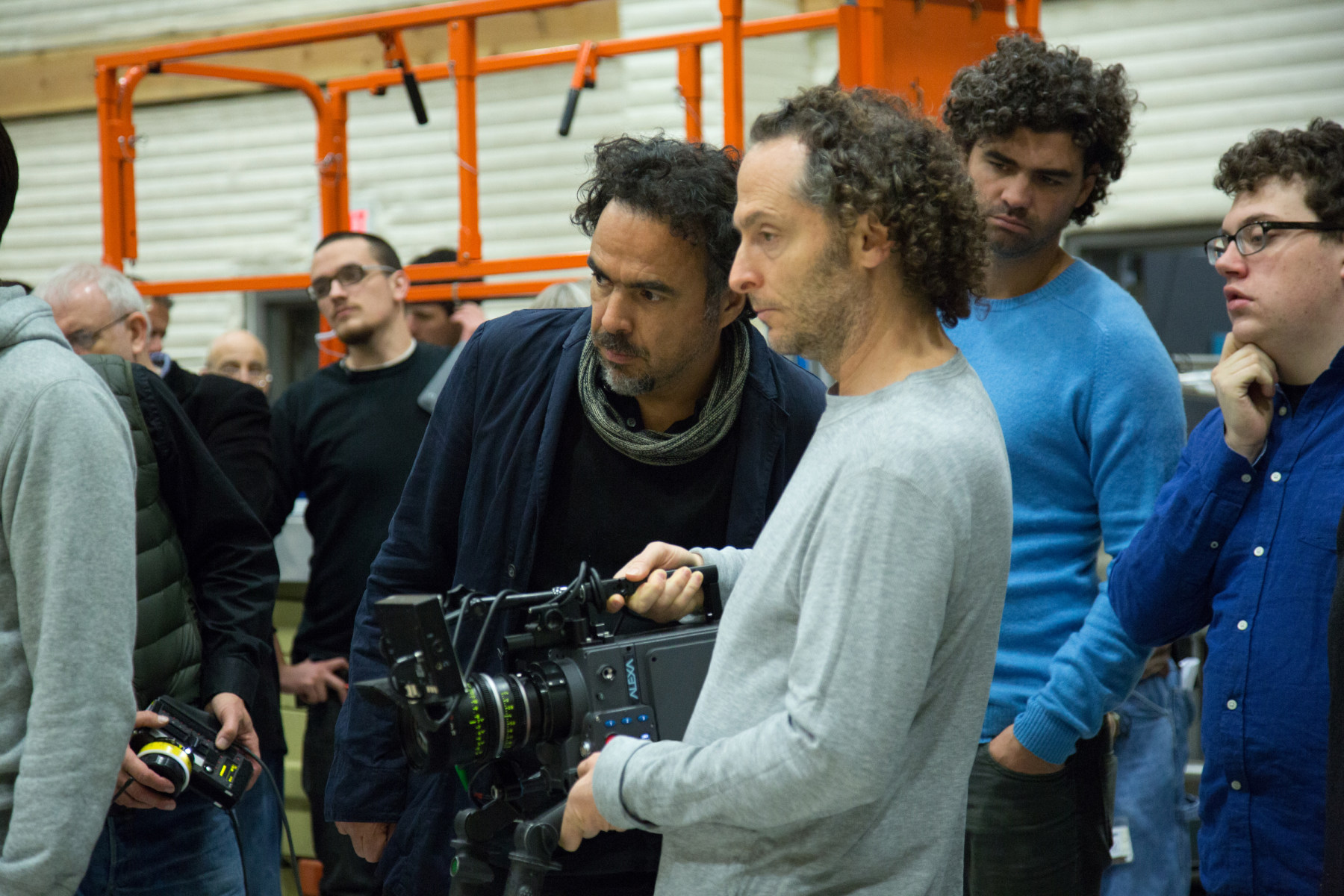
What cameras did you shoot on?
We used mostly the ALEXA M for handheld, or when the scenes were very, very long. The beautiful thing about the camera is that it is very small. It can get between two actors who are very close. It allows you to get in tiny spaces and situations between actors where you feel like you’re in the center of a hurricane or in the center of the action. The ALEXA XT was on the Steadicam, which I used for shots that were a little more objective, a little wider. The M was for all the shots where the camera had to get inside, shots that are more subjective, shots that are just tighter with the actors.
It seems like blocking the actors was more involved than on other productions?
American actors, with all due respect, use that to their advantage, in the sense that they know they can give a certain performance if the camera is far away, or they can do a different performance in close-ups. They know they don’t have to learn the entire script, that they can learn pieces of the script day-by-day and so on. In the case of this movie, it was a little closer to theater in that the actors had to know their dialogue perfectly. There could not be any mistakes because if you’re in minute 30 of a take and someone makes a mistake, you kill that person. You want to die and you cry. It’s tremendously catastrophic in terms of production, you can lose a day or two days of work. That danger brings amazing stuff into the energy of the movie. We were super lucky that Michael Keaton is extraordinary about working that way. Even for the props person it becomes very complex. For me as a lighting designer or as a camera operator, it takes major choreography with the whole cast and crew. It’s incredibly exciting when you achieve the shots. The feeling is exhilarating. It’s fantastic.