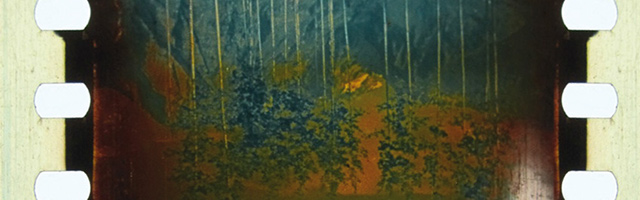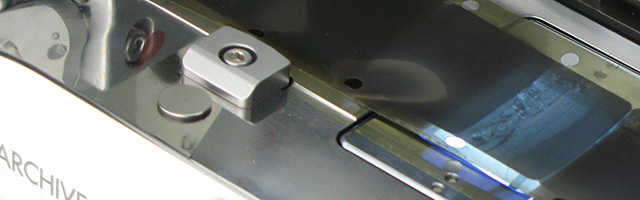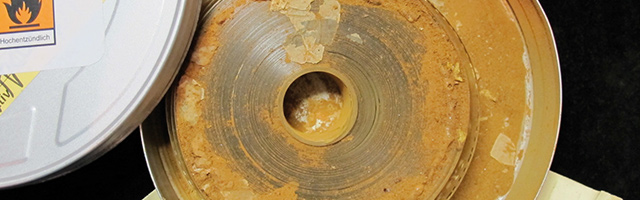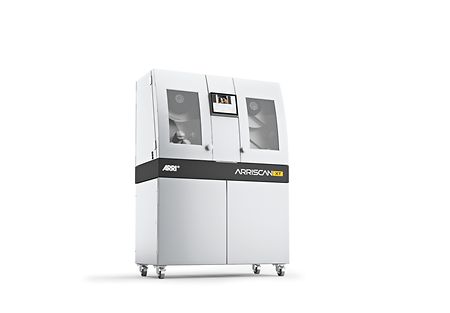
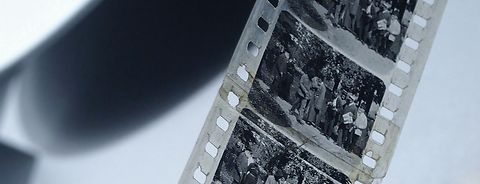
Image of an analogue film. Filmmakers solutions.

Archive Technologies

Solutions for motion picture archives

A race against time

All around the world, film archives have to deal with the immense amount of film material that has accumulated over the last century, most of which has yet to be digitized to an acceptable standard.

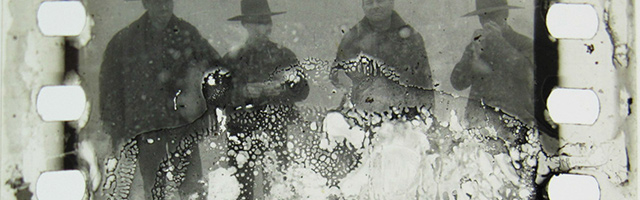
The early years of cinema saw a profusion of short-lived film formats, which complicates matters; worse still is the fact that overuse and poor storage conditions have led to damage of many different types, from torn or missing perforations to scratches, warping, and shrinkage of film materials.

In many instances, the struggle to preserve what remains of our collective cinematic heritage is a race against time.
The challenge that lies ahead

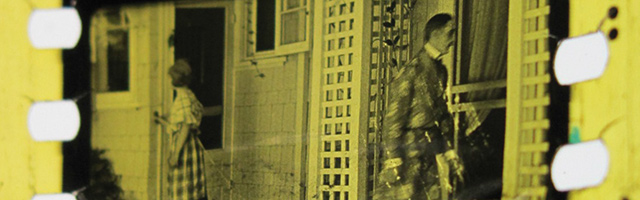
  • There are many different types of material: black-and-white and color films, unique and non-standard formats, films on a cellulose-nitrate, cellulose-acetate or triacetate base. Both emulsion and film carrier are subject to degradation and are affected by different types of problems. Torn or missing perforations, scratches, warping and shrinkage are only the most common issues affecting archive material. 

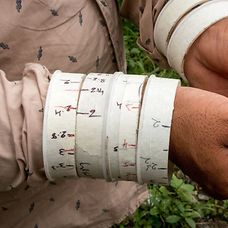
  • Depending on the storage conditions and age of archive film material, various degrees of shrinkage are common.

  • A typical restoration process requires a lot of dust and scratch removal. This can be a time-consuming task, as can the elimination of mold artefacts.

  • Film archives contain all kinds of film formats and perforation types.

  • Nitrate film, which ceased to be used in 1951, requires the most urgent attention, as this material deteriorates constantly and is highly flammable. 

Quotes

Picture of Richard Falkner from the company Nga Taonga Sound & Vision

Richard Falkner

Ngā Taonga Sound & Vision

The ARRISCAN allows us to digitally preserve unusual, early film formats that would otherwise be lost to time, secure in the knowledge that even the most fragile materials will be transferred safely.

Picture of Davide Pozzi, the director of L´Immagine Ritrovata, Italy

Davide Pozzi

Director of L’Immagine Ritrovata, Italy

The Wet Gate saves time, but more importantly it fixes problems that could not be fixed in any other way.

Picture of Ben Thompson, the Image Quality Section Leader of BFI National Archive

Ben Thompson

Image Quality Section Leader, BFI National Archive

If we get a really bad section then we’ll put it through the Wet Gate.

Picture of Pawel Smietanka, the Head of Film Restorations of the Polish Natilonal Film Archive

Pawel Smietanka

Head of Film Restorations,  Polish National Film Archive

The idea is to have a complete chain with the ARRISCAN and ARRILASER, in order to not only restore our collection, but also to preserve it for a long time to come.

Picture of Wang JianXiong, the VP and CTO and Senior Technician of China Film Post Production Company

Wang JianXiong

VP and CTO and Xiao Bo, Senior Technician of China Film Post Production Company

Thanks to the ARRISCAN’s pinless scanning function and Wet Gate, our Film Restoration Project can now deal with old archive films that were shot 70 years ago.

Picture of John Palmer, the Digitial Imaging Consultant of UK

John Palmer

Digital Imaging Consultant, UK

The ARRISCAN’s archive transport mode allows the movement and tension to be tailored for a variety of distressed source materials, producing digital scans of the highest quality…

Picture of Jimmy Fournier, the Engineer of National Film Board Canada

Jimmy Fournier

engineer, National Film Board Canada

The ARRISCAN’s archive transport mode allows the movement and tension to be tailored for a variety of distressed source materials, producing digital scans of the highest quality…

Picture of Jeffrey Sonora from the FPJ Productions, Philippines

Jeffrey Sonora

FPJ Productions, Philippines

I was really amazed by how advanced the technology is for film restoration in Europe and how much effort ARRI has put into the archiving industry.

Image of the logo of the British Film Productions

Charles Fairall

Head of Conservation, British Film Institute

The keyword behind our decision to go with ARRI is preservation…our fundamental concern when dealing with our collections is that we care for them properly.