24 ALEXA 35 Live cameras at the 2026 Eurovision Song Contest in Vienna prove the game-changing image quality and easy integration of ARRI’s Multicam System.
Jun. 19, 2026
How the story began…
When Austria triumphed at the 2025 Eurovision Song Contest in Switzerland, they won not only the trophy but also the honor of hosting in 2026. Austrian state broadcaster ORF was determined to make its mark on the event’s history by elevating the impact of what was already established as the biggest concert broadcast in the world. “We wanted to contribute something new to it,” says Michael Kögler, Head of Directors at ORF. “Our goal was to give a new look and feel to the song contest.”
ORF put out a statement about its intended new aesthetic during the early planning stages, saying, “Our inspiration came from Hollywood: special cameras will show the performances in a cinematographic look—just like concerts by Coldplay and Taylor Swift are now staged.”
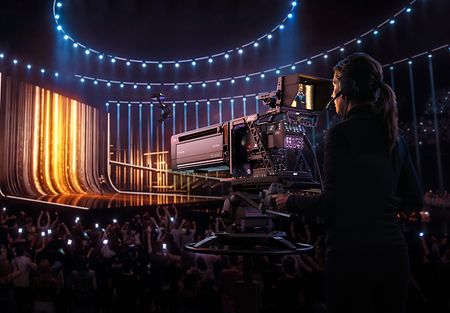
Those “special cameras” were ALEXA 35 Live models, equipped with ARRI’s Live Production System LPS-1 and numerous dedicated live accessories. For the first time in Eurovision’s 70-year history, the contest would be captured not with standard broadcast cameras, but ARRI Multicam System cameras with Super 35 sensors, industry-leading dynamic range, exceptional sensitivity, bespoke creative looks, and unrivalled cinematic image quality.
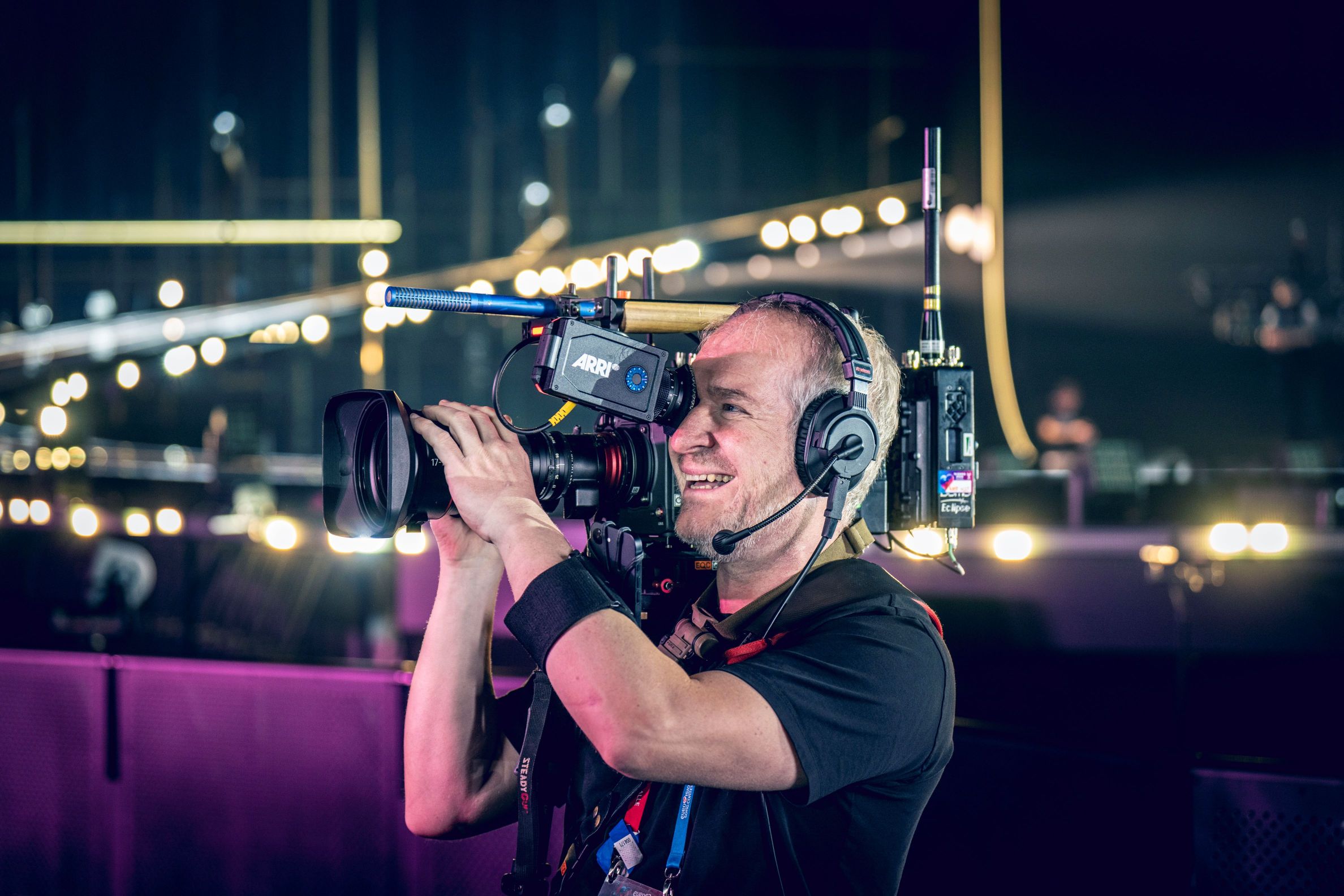
It was the first time I had worked with ARRI in a typical live broadcast environment and I was surprised by how easy it seemed. …the camera sits nicely on the shoulder and is easy to operate handheld; I really love the setup and the viewfinder is great as well.
ARRI was asked to provide 24 ALEXA 35 Live cameras, which—aside from a few specialist camera rigs—would be solely responsible for capturing the live events in Vienna. The complex broadcast demanded specific features not yet present in ARRI’s system, so the company’s software engineers swiftly brought forward plans to integrate new functionality via a major firmware update, including multi-matrix color correction and continuous fine adjustment of gain. This is a big advantage of the way ARRI cinema and live cameras are designed—their FPGA architecture allows continual feature enhancements through SUPs (software update packages).
Among the features accelerated to be ready for Eurovision 2026 were:
Multi-matrix color correction
Continuous fine adjustment of gain
New pre-installed user setups
Advanced highlight management
HDR white level and full-frame AWB
Auto-camera detect via the LPS-1
Six weeks before the broadcast, ARRI’s team was at NEP Germany in Munich, integrating ARRI FBS-1 Fiber Base Stations and Skaarhoj RCP units into the main and backup OB vans. The Fiber Base Stations would receive signals from the FCA-1 Fiber Camera Adapters on the cameras, while the Skaarhoj RCPs allowed traditional live painting/shading and full control over ALEXA 35 Live camera settings. As well as an image stream, the setup delivered tally light and intercom signals between the cameras and the OB van via a mix of XLR and TSL, since some of the cameras were wired and others were wireless. Very little additional cabling was required in the OB vans and the ARRI integration was easily achieved in a day.
Audiences expect Eurovision performances to be captured from an amazing array of camera positions, and Vienna was no exception. Choosing ARRI cameras did not in any way restrict the places or ways in which they could be rigged. Michael Kögler notes, “When selecting camera rigs, we could use Steadicams, Scorpio cranes, rail cameras, and use everything the same without any restrictions due to the use of ARRI cameras.” In fact, the 24 ALEXA 35 Live cameras were used on pedestals, remote dollies, Steadicams, cranes, and handheld, as well as on 2D and 3D cable rigs, covering the action from every conceivable angle.
Max Meißl, Director of Photography at ORF, comments, “Speaking honestly, operating the ARRI cameras—given that we also used broadcast lenses—was just like using a standard 3-chip CMOS or CCD camera. It hardly made any difference. I actually found it easier to pull focus, because the shallower depth of field made it easier to see when the image was soft.”
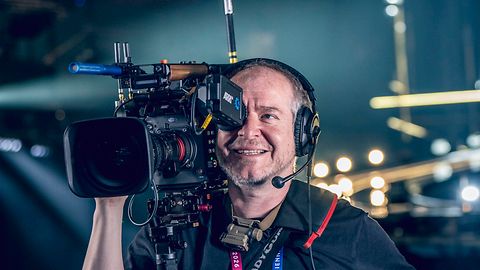
One of the camera operators shooting handheld with an ALEXA 35 Live was Bernhard Popovic, who says, “It was the first time I had worked with ARRI in a typical live broadcast environment and I was surprised by how easy it seemed. My working area was in the green room and the pits, so I was very close to the fans on the grandstands, moving around a lot and walking up and down the stairs. I had to be quick and the camera handled very well…it sits nicely on the shoulder and is easy to operate handheld; I really love the setup and the viewfinder is great as well.”
When you see a special effect on a broadcast camera there is no color detail. With the ARRI cameras you saw every individual light source. And with fire you saw the colors of a flame develop from ultraviolet to yellow, to a glassy white. These are things that people watching at home have never seen in this context before.
Michael Kögler
Head of Directors at ORF
The cinematic ARRI image
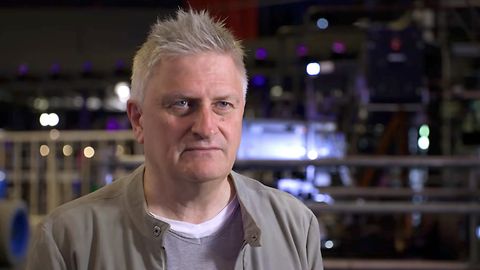
ALEXA 35 Live cameras were chosen by ORF because—more than any other option on the market—they fulfilled the original brief of delivering a Hollywood-inspired cinematic look. Michael Kögler recalls, “During a test in Sweden we placed the ARRI cameras next to the main broadcast camera of our Swedish colleagues and we saw completely different color nuances with the numerous light, fire, and special effect elements. When you see a special effect on a broadcast camera, it's a light flash; there is no color detail. With the ARRI cameras you saw not just light spots, but every individual light source. And with fire you saw the colors of a flame develop from ultraviolet to yellow, to a glassy white. These are things that people watching at home will see—things they have never seen in this context before.”
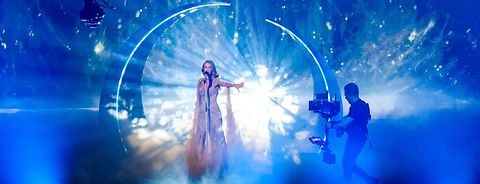
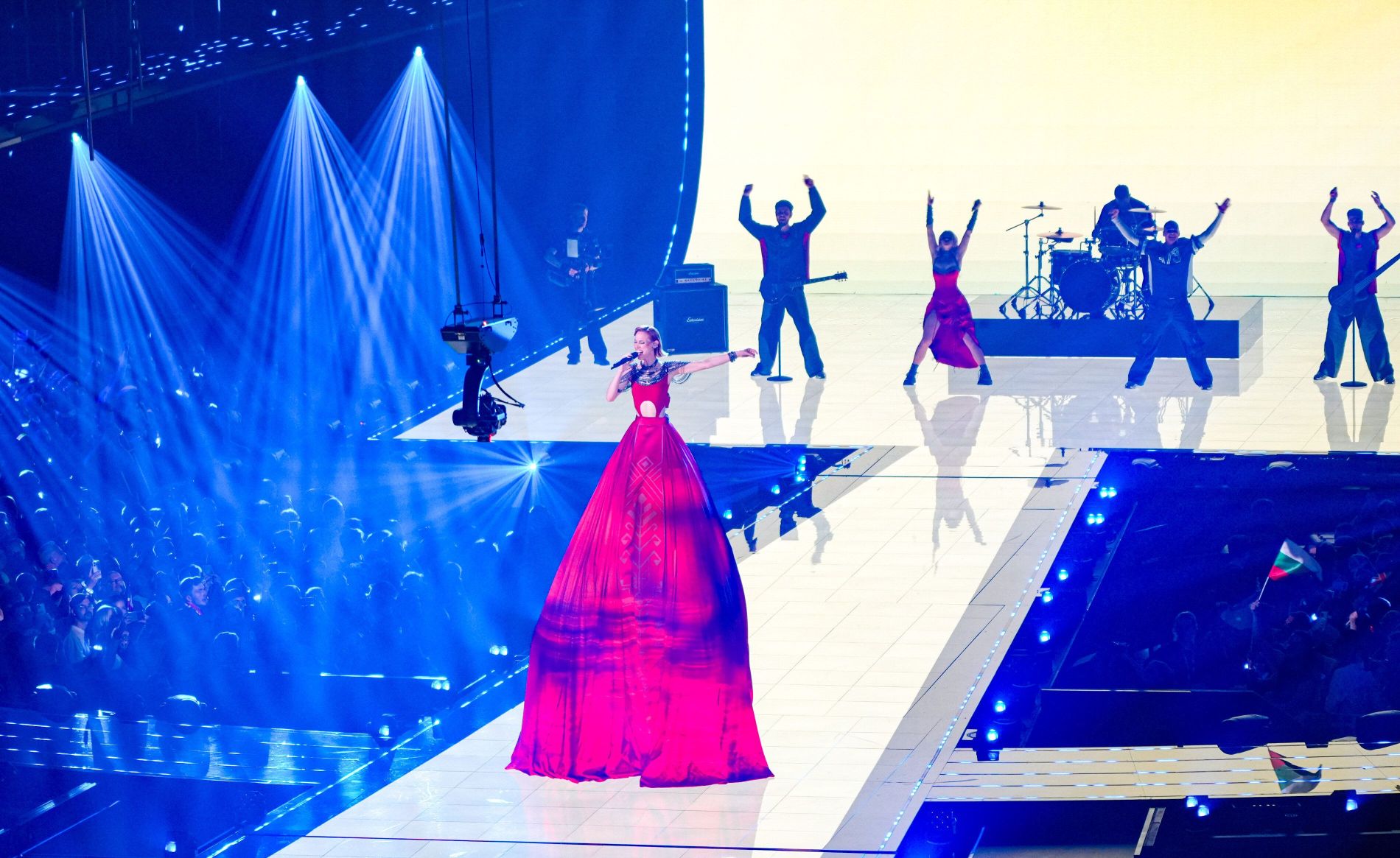
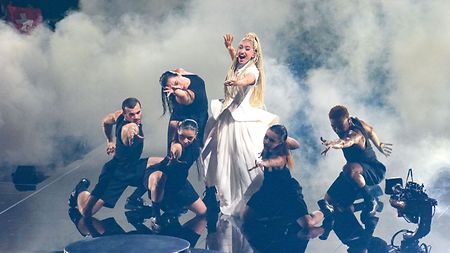
Many of the performances in Vienna involved special effects and light flashes such as these, as well as intense contrast ratios and colors that are traditionally difficult to capture with standard broadcast cameras. As an example, the Australian delegation’s entry “Eclipse” involved a gold costume and a highly saturated blue background, both of which are extremely challenging to digital sensors (see feature image), but were faithfully captured by ALEXA 35 Live in all their vibrancy. The ARRI cameras also rendered LED display walls far more accurately than standard broadcast cameras, with no clipping or moiré effects.
Camera operator Bernhard Popovic was impressed by the ALEXA 35 Live’s dynamic range and color rendition, saying, “It’s often a problem for sensors to render highly saturated LED lights well, but you don’t see that with the ARRI system. It's really beautiful how the highlights roll off, especially if you have these bright lights coming in on the skin tones and still it's not washed out…there is still detail rendered there and even the blacks are beautiful, so it's a huge benefit.”
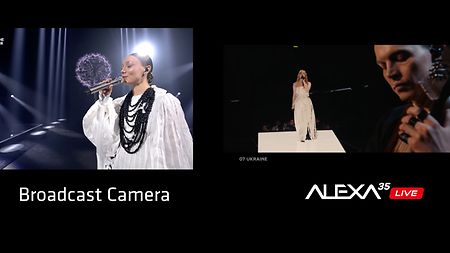
This video compilation clearly shows the added production value of using ARRI ALEXA 35 Live cameras rather than standard broadcast cameras. In directly comparable footage of the same performers and the same songs, the ARRI cameras deliver a more cinematic look with better skin tones, highlight retention, color accuracy, and sensitivity.
I believe this will change the future of television; there are possibilities for a completely different visual language, a completely different representation for various events.
Michael Kögler
Head of Directors at ORF
Automated creative look-switching
Image quality was not the only appeal of the ARRI system, as DP Max Meißl notes: “There are two major advantages to the ARRI system. One is the shallow depth of field…which allows me to work cinematically in a live setting. The second is the use of LUTs; I can easily generate look-up tables for color moods in advance, and I can see in the viewfinder what the final images will look like when broadcast.”
The ability of the ARRI Multicam System to implement bespoke creative looks was enthusiastically embraced by the delegations. During preproduction ARRI prepared a ‘look book’ of around 50 music video-inspired looks, from which the delegations made selections in collaboration with the event’s lighting designer and vision mixer. Only one country chose to stick with the show LUT; all the others chose an ARRI look and the winning delegation, Bulgaria, used two different looks during its performance.The addition of cinema-style looks on top of creative lighting design and traditional live painting enabled subtler nuances of color and was especially beneficial to skin tones. Everyone from the directors to the camera operators could see the benefits, as Bernhard Popovic comments: “Every country had its own lookup table that could be loaded into the cameras instantly, and you could switch between the different looks very easily…This is a huge benefit of the ARRI system and brings new possibilities to the broadcast environment.”
With so many looks being used during the final show, ARRI set up a workflow that enabled automated look-switching on a shot-by-shot basis. This facilitated what looked like 25 unique and perfectly graded high-end music videos, but shot in real time and output live with no postproduction and no additional complications to the broadcast workflow. Cameras were grouped together for the application of synchronized look control, while familiar operational controls were maintained for the vision team via standard RCPs.
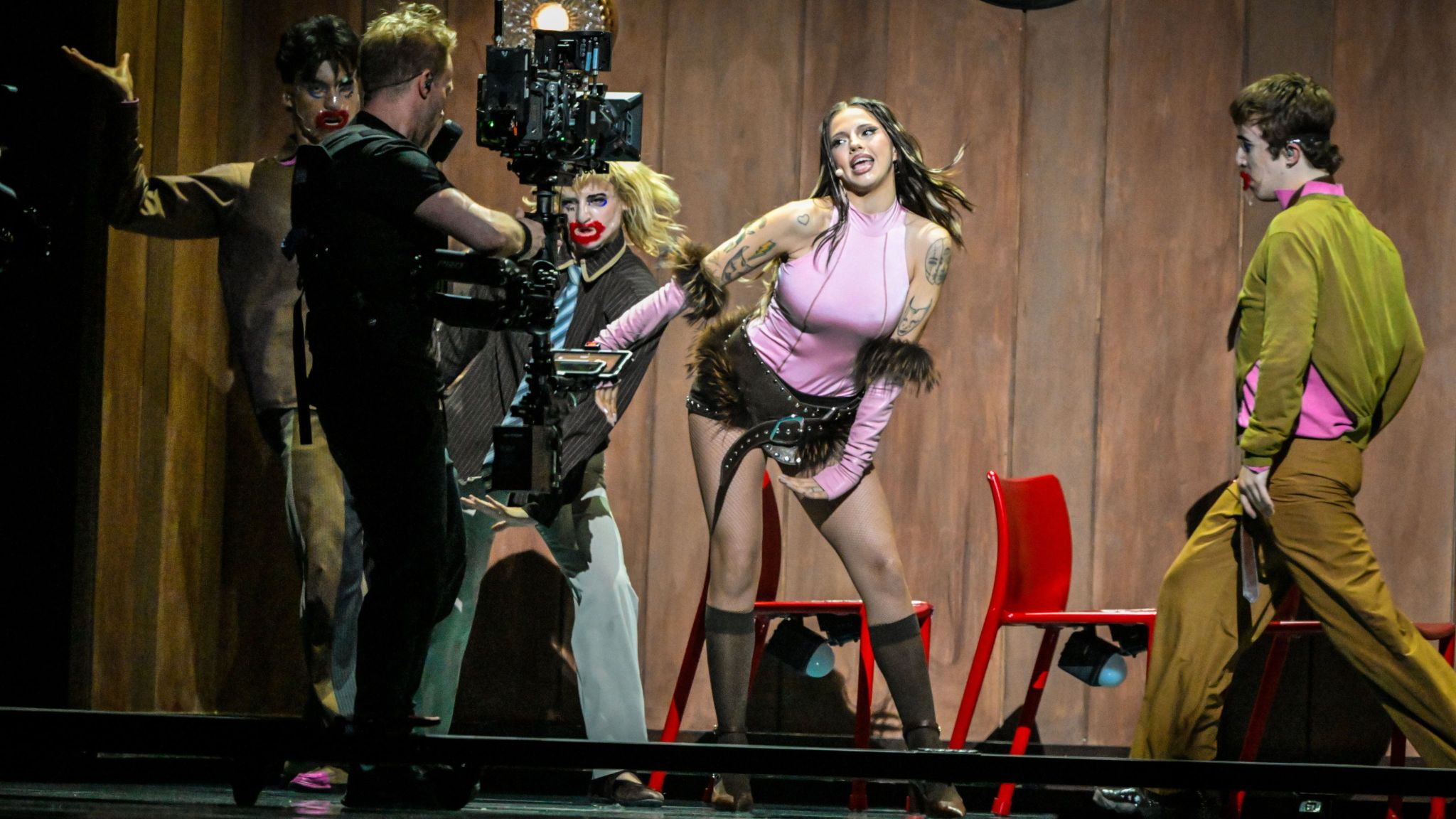
Singer Monroe performing for France at the Wiener Stadthalle.
The addition of cinema-style looks on top of creative lighting design and traditional live painting enabled subtler nuances of color and was especially beneficial to skin tones. Everyone from the directors to the camera operators could see the benefits, as Bernhard Popovic comments: “Every country had its own lookup table that could be loaded into the cameras instantly, and you could switch between the different looks very easily…This is a huge benefit of the ARRI system and brings new possibilities to the broadcast environment.”
A sign of things to come
After all the preparation, the upgraded camera functionality, the look building, and the many rehearsals, the 2026 Eurovision grand final was broadcast live to at least 40 countries on 16 May 2026. The new cinematic aesthetic was as noticeable to the audiences at home in all of those 40 countries as it was to the creatives and technicians in Vienna. ORF took to the socials to proclaim their pride at being the first Eurovision hosts to utilize ARRI cameras and to elevate the visual quality of the production so significantly.
Michael Kögler, ORF’s Head of Directors, concludes: “I believe this will change the future of television; there are possibilities for a completely different visual language, a completely different representation for various events—and not just for live entertainment, but also for sports events, where we already partially use cinematic cameras, but not yet to the degree that we used them here, so there is a lot of exciting potential.”
"ARRI, 12 Points"
As part of an exclusive media cooperation with ARRI, CineD went behind-the-scenes and documented the entire process of ARRI's journey to the ESC from start to finish. Watch the video here: