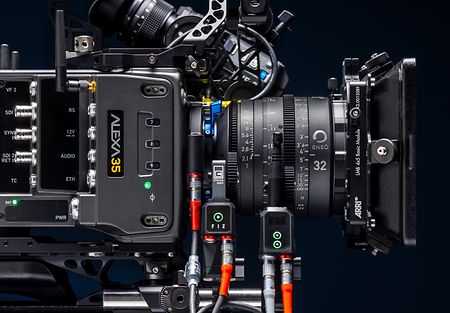
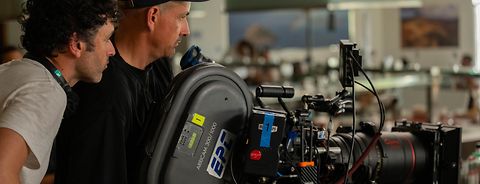
"The Beloved" ("El ser querido"), the new film by Rodrigo Sorogoyen starring Javier Bardem and Victoria Luengo, competed this year for the Palme d'Or in the Official Competition at the Cannes Film Festival. The story follows Esteban Martínez, a filmmaker as celebrated for his body of work as he is haunted by a turbulent past, who offers his daughter Emilia a role in his upcoming film under the pretext of reviving the young actress's career. The shoot reopens long-standing family wounds, forcing father and daughter to confront the memories that drove them apart. Director Rodrigo Sorogoyen (left) on set with cinematographer Álex de Pablo (right) and the ALEXA 35 camera.
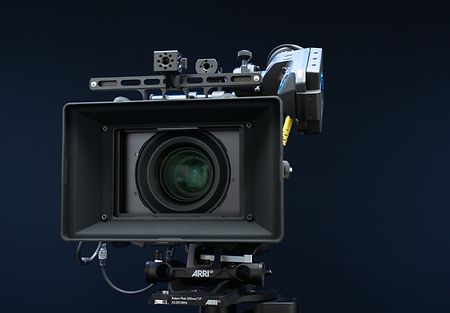
For "The Beloved" de Pablo worked with an array of ARRI cameras—including the ALEXA 35, ALEXA Mini LF, ALEXA Mini, ARRIFLEX 416 Plus, ARRICAM LT, and ARRIFLEX 765—interweaving 16 mm, 35 mm, and 65 mm negative film with digital acquisition, while alternating between color and black-and-white to craft a visual texture as fragmented and fluid as the characters' own memories.
In this interview, Álex de Pablo speaks with ARRI about his process, his creative shorthand with Sorogoyen, and the choices behind one of the boldest visual explorations in contemporary Spanish cinema.
You have collaborated with Rodrigo for a long time. How did conversations around "The Beloved" begin?
We started discussing the project even before the script was written. Naturally, the idea evolved and shifted over time across different iterations, but the core search remained constant and was carried through the entire feature. We developed the light, the camera language, and the overarching narrative as a collective journey, without rushing or expecting immediate answers.
For us, it is essential to listen to our instincts and to each other over time, from those early conversations all the way through daily production. We believe there is no other way to work through a creative process where many things cannot be planned or felt in advance, which otherwise might lead you to miss out on wonderful inspirations or happy accidents—which is where, to a large extent, the magic of cinema truly happens.
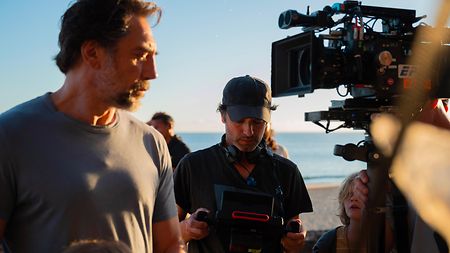
Director Rodrigo Sorogoyen and Javier Bardem on the set of "The Beloved."
What were your visual references for this project?
We do not typically rely on visual references. When we do bring them up, it is usually to convey a feeling rather than replicate something specific. We talked about films, directors, and cinematographers that resonated with us, particularly for how they mixed formats—such as Oliver Stone and Robert Richardson, or Michael Mann and Dante Spinotti. We also referenced films like Park Chan-wook's "Decision to Leave," which bears no direct stylistic connection but interested Rodrigo as an example of masterful, elegant blocking and framing that never feels self-conscious.
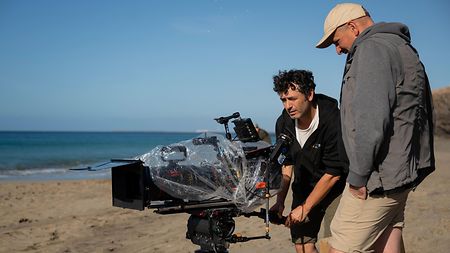
Rodrigo Sorogoyen on location in Fuerteventura, where the island’s Atlantic landscapes became both the setting for "The Beloved" and the visual foundation of the film-within-the-film.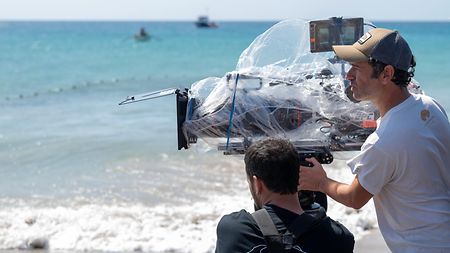
Where was the film shot, and how long was the production schedule?
We shot primarily on location in Fuerteventura—around Pájara and La Oliva, especially in the Punta de Jandía area—with additional filming in Madrid. Fuerteventura served not only as our physical filming location but also as the setting for the film-within-the-film: in the story, Esteban directs "Desierto," a production set in the Spanish Sahara of the 1930s. The island’s landscape therefore had to embody both eras and support both narratives simultaneously. The production took place between the island and Madrid, from late winter into spring.
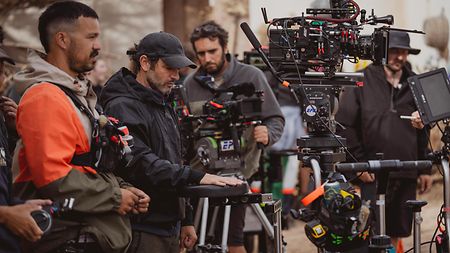
For "The Beloved," Álex de Pablo combined a wide range of ARRI cameras, moving between digital and film.
You deployed an extensive selection of ARRI cameras on this film: ALEXA Mini LF, ALEXA 35, ALEXA Mini, ARRIFLEX 416 Plus, ARRICAM LT, and ARRIFLEX 765. How did you decide which camera and format to assign to each narrative layer?
We established a few initial parameters, but we left ample room for improvisation and consciously avoided making purely rational choices or tying a specific format to an explicit meaning for the audience.
I was initially concerned that viewers might find the format shifts distracting or disengaging, but I think it worked remarkably well. It brought the audience closer to what lies at the core of the film: the inherently random, unreliable way our memories are built and reshaped. Just as memory is imprecise and shifts with our emotions, we wanted our format choices to stem from immediate intuition rather than an explained narrative logic.
With so many diverse formats and media—from digital sensors to 16 mm, 35 mm, and 65 mm film—how did you approach visual continuity across these distinct worlds?
In truth, we did not want uniformity across formats, and I generally do not use LUTs; I did not use them here either. In my view, striving for total visual consistency between digital sensors and 16 mm, 35 mm, or 65 mm would have meant flattening the very qualities that drew us to each medium: its grain, its color rendition, and its unique way of interpreting reality.
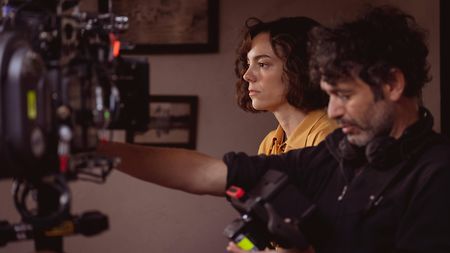
Actress Victoria Luengo and Director Rodrigo Sorogoyen on set.
Could you describe your lens package and how you selected specific glass across the different narrative layers and formats?
We shot on a wide range of optics, including ARRI/Zeiss Ultra Primes and ARRI/Zeiss Ultra 16s. The lens selection followed the same intuitive philosophy as our camera and format choices: we avoided assigning a specific focal length to a particular concept or character beforehand.
Rather than looking for a specific lens profile, our focus for close-ups was understanding the geometry and skin of the actors' faces under the light. The film relies heavily on the emotional weight carried in the glances between father and daughter, and the camera simply had to be there to capture that truth without imposing itself.
The opening sequence, spanning almost 20 minutes, was shot on the first day of production with Bardem and Luengo using five hidden cameras and no crew present in the room. How did you rig those five cameras, and how did you approach the lighting, knowing you could not adjust anything during the take?
We introduced, dimmed, and shaped the diegetic practicals inside the location as needed, while the primary key lighting came from outside through the windows using three ARRIMAX units. The cameras were concealed within custom set extensions designed by the art department, positioned behind two-way mirrors. I was thrilled with the cinematic approach as a whole. To preserve the raw spontaneity of that first encounter, we made sure the space remained completely clear of equipment and crew members.
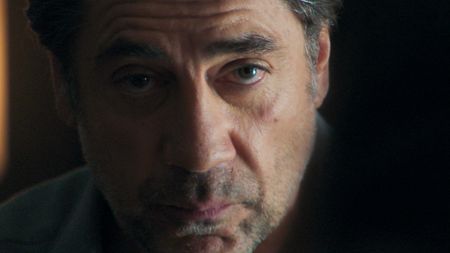
Javier Bardem in the opening sequence of "The Beloved" captured with five concealed cameras and no crew present in the room.
Was there a particular scene that proved especially challenging to execute?
Shooting a sequence that runs roughly twenty minutes on screen—a family meal—with six cameras across an entire week of daytime exterior shooting was an immense challenge. We combined every format mentioned, with one of the cameras handheld in my own hands. Balancing the ever-changing outdoor natural light, maintaining visual harmony across such disparate media, and sustaining the actors' emotional momentum over so many consecutive days in the same scene made it without question the largest logistical and creative undertaking of the entire shoot. On a personal level, shooting in black-and-white celluloid with our selected lenses was truly special.
Filmed over the course of a week, the nearly 20-minute family lunch scene became one of the most challenging sequences of the entire production.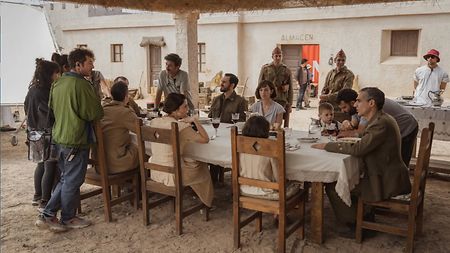
What was the single greatest challenge of the entire project?
Letting go, opening my mind, and refusing to be bound by standard industry formulas. Embracing the idea that a format could switch without an explicit narrative justification, or that an entire scene might rest on hidden cameras without any real-time control over the actors' blocking and performance, demanded that I surrender the instinct to control every detail.
Opening picture: María Heras.